

Logo
WhatsAppFacebookYouTube

Our Blog

Latest insights, updates, and stories

Ceiling construction diagram showing components like explosive bolt, adjustable panel, furring channel, gypsum board, load channel, level connector, and more.
Apr 29, 2026 Uncategorized

What Is the Checklist for Suspended Ceilings?

A suspended ceiling checklist includes frame layout, hanger alignment, board type selection, fire rating, sound insulation, and access coordination. Each point ensures performance, safety, and maintenance efficiency through the life of the building. TRUSUS installation insight: precision in setup defines everything above and below. Proper documentation and on-site checks must confirm that all structural and […]
Read more
A suspended ceiling with white tiles arranged in a grid pattern, viewed from below, creating a modern and clean look.
Apr 28, 2026 Uncategorized

Can a Ceiling Grid Get Wet?

A ceiling grid can get wet, but it should not stay wet. Short-term moisture exposure may not cause failure, but prolonged dampness will corrode metal components, loosen fasteners, and stain attached ceiling tiles. TRUSUS ceiling insight: water isn’t the enemy—stagnant moisture is. Proper ventilation, vapor barriers, and anti-rust coatings help ceiling grids survive in humid […]
Read more
How Far Can Gypsum Board Span?
Apr 27, 2026 Uncategorized

How Far Can Gypsum Board Span?

A standard gypsum board can safely span up to 600 mm between supports when installed on the ceiling, and up to 400 mm for heavier 15 mm boards. The maximum span depends on board thickness, framing system, and load factors. TRUSUS structural insight: the limit of a board is not about its strength—it’s about the harmony between material […]
Read more
Office ceiling featuring a grid of square tiles and multiple fluorescent light fixtures installed within the tiles.
Apr 24, 2026 Uncategorized

How to Tell If a Gypsum Ceiling Is Sagging?

A sagging gypsum ceiling shows visible dips, uneven joints, or cracking at seams. You might notice light reflections changing, or ceiling edges pulling apart from walls—it’s all a sign of loss of tension. TRUSUS structural insight: what looks like a curve might be a story of imbalance. Check across the room with a straight edge […]
Read more
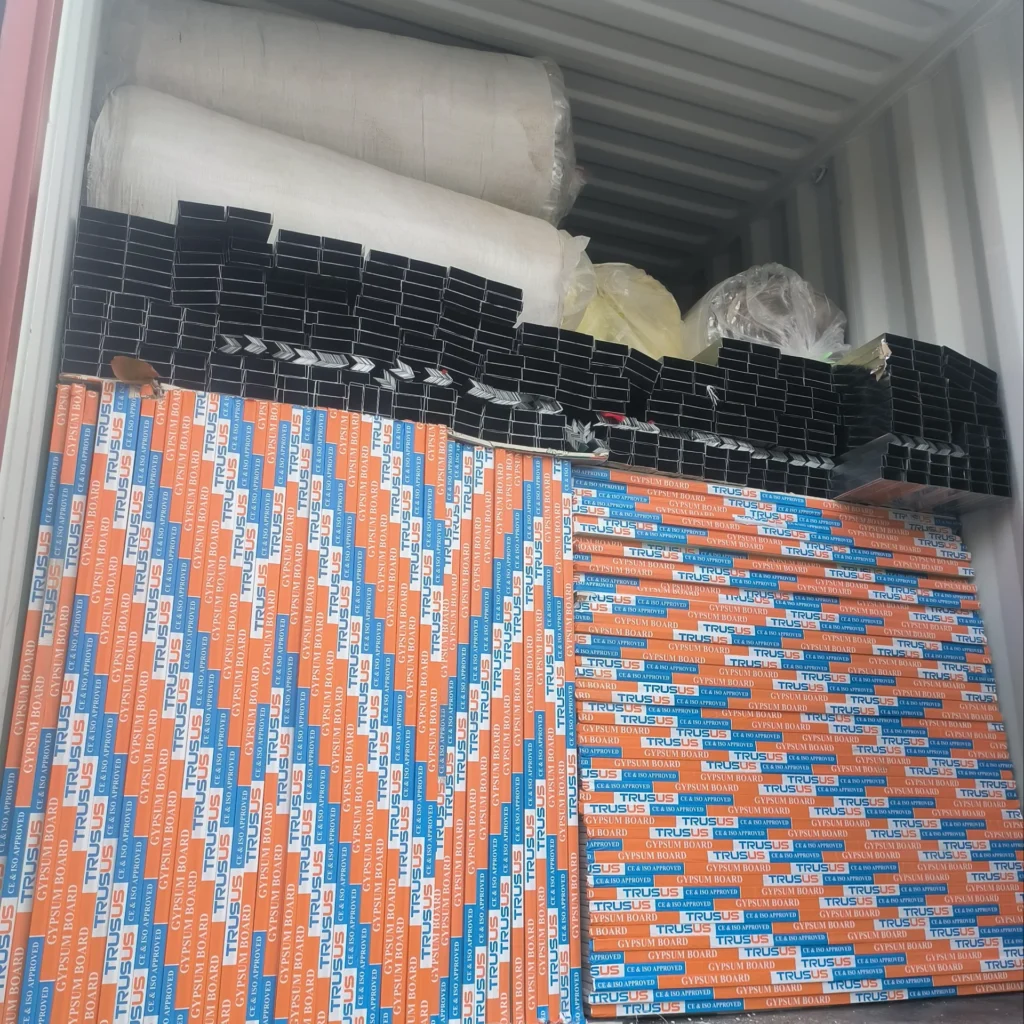
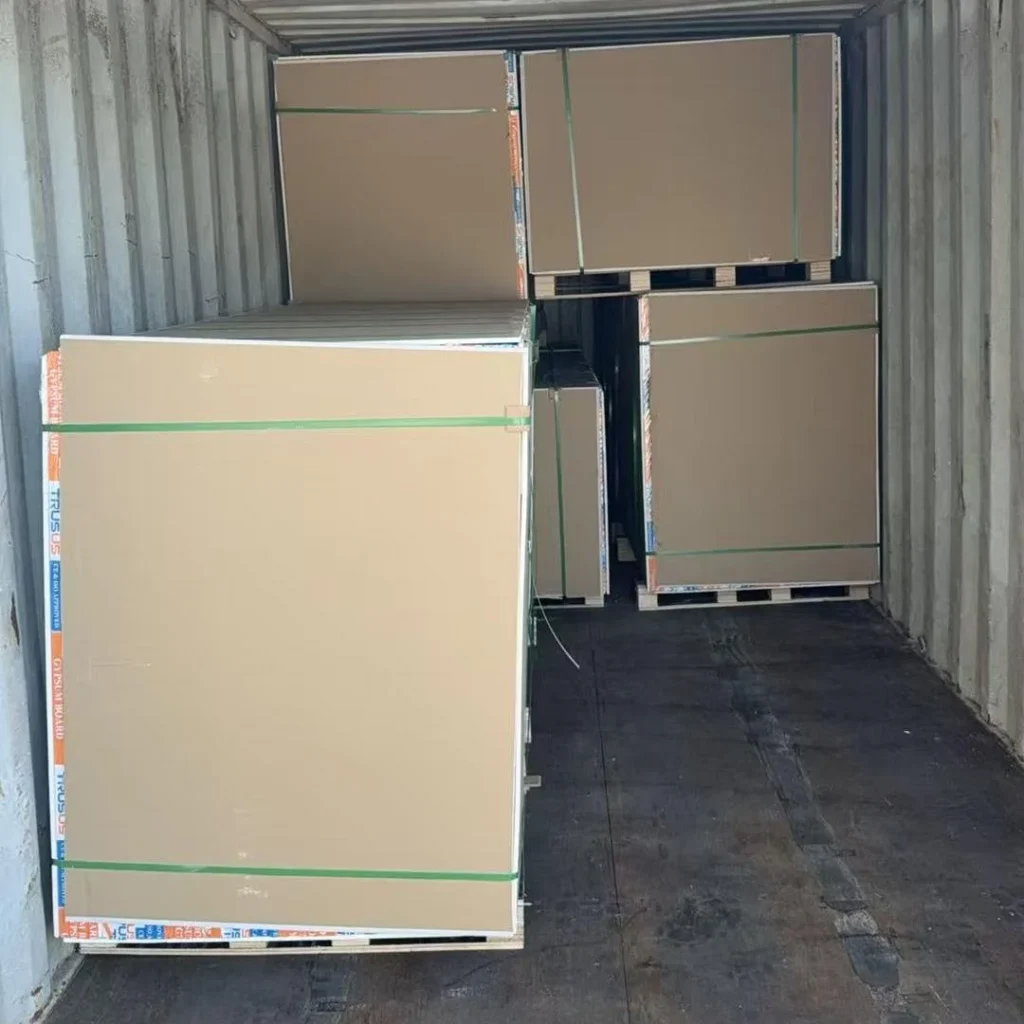
Open shipping container fully loaded with white bags, cardboard boxes, and rolled materials, organized neatly for transport.
Apr 23, 2026 Uncategorized

Can I Put Plasterboard Over Existing Plaster?

Yes, you can install plasterboard over existing plaster as long as the old surface is structurally sound, dry, and free from loose materials. The key is proper preparation, fixing method, and leveling. TRUSUS renovation insight: renovation is not only adding new layers—it’s restoring the wall’s strength from within. If the plaster is solid, use adhesive […]
Read more
Cardboard containers securely stacked inside a shipping container, ready for transportation.
Apr 22, 2026 Uncategorized

Why Can Plasterboard Be Recycled?

Plasterboard can be recycled because its core material, gypsum (calcium sulfate dihydrate), can be separated, cleaned, and reused in new board production. When processed, gypsum regains the same chemical structure and quality, making it endlessly recyclable. TRUSUS sustainability insight: gypsum never truly dies—it only changes form to serve again. The paper lining is also recyclable. […]
Read more
Large stacks of drywall pallets stored in a warehouse with alternating green and branded patterns.
Apr 21, 2026 Uncategorized

What Is the Best Drywall for High Humidity?

The best drywall for high humidity is moisture-resistant (green board) or cement-faced drywall (blue board) designed for bathrooms, kitchens, and basements. For extreme conditions, use fiberglass-faced gypsum panels that resist mold growth. TRUSUS climate insight: walls breathe with air—choose boards that help them endure, not just survive. The key is pairing the board with proper […]
Read more
Large stacks of green gypsum boards arranged in a warehouse, ready for distribution.
Apr 20, 2026 Uncategorized

When Cutting Gypsum Board, What Side Do You Cut First?

Always cut Gypsum Board on the front paper side first—the finished, ivory-colored surface. Scoring this side controls the break line and keeps the facing paper smooth and intact. TRUSUS craftsmanship insight: every clean cut starts from intention, not force—the surface guides the strength. Once scored, snap the sheet along the line and cut through the […]
Read more
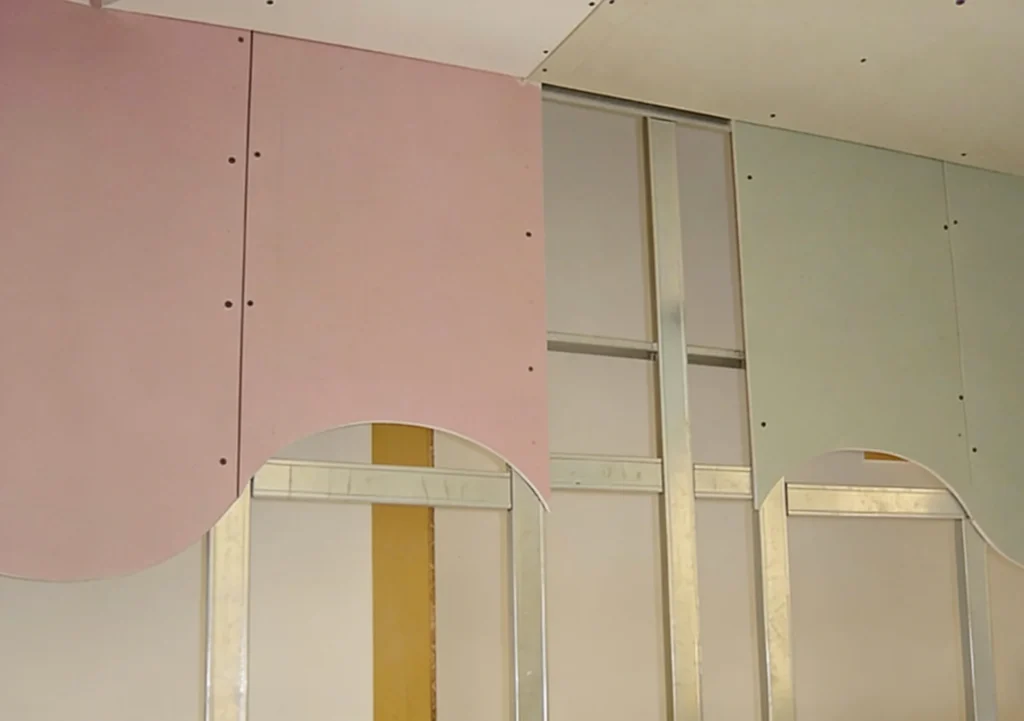
Pink and green drywall panels partially installed on a metal frame, showing curved designs and construction progress.
Apr 17, 2026 Uncategorized

How to Mud and Tape Seams if Your Drywall Is Uneven?

If your drywall is uneven, fill gaps first with joint compound before taping. Use wider joint knives to feather edges smoothly and build gradual layers until flat. Never force tape over deep depressions. TRUSUS precision insight: before you achieve beauty, fix stability—mud is a bridge, not a mask. Uneven walls need patience. Each compound layer […]
Read more
How to Make Drywall Look Seamless?
Apr 16, 2026 Uncategorized

How to Make Drywall Look Seamless?

To make drywall look seamless, use joint tape, joint compound, proper layering, and sanding to blend seams into one continuous surface. The goal is to make edges invisible after painting. TRUSUS surface insight: seamless walls aren’t created by hiding mistakes—they’re built by respecting every layer of connection. Smoothness begins with good tape adhesion, flat mud […]
Read more
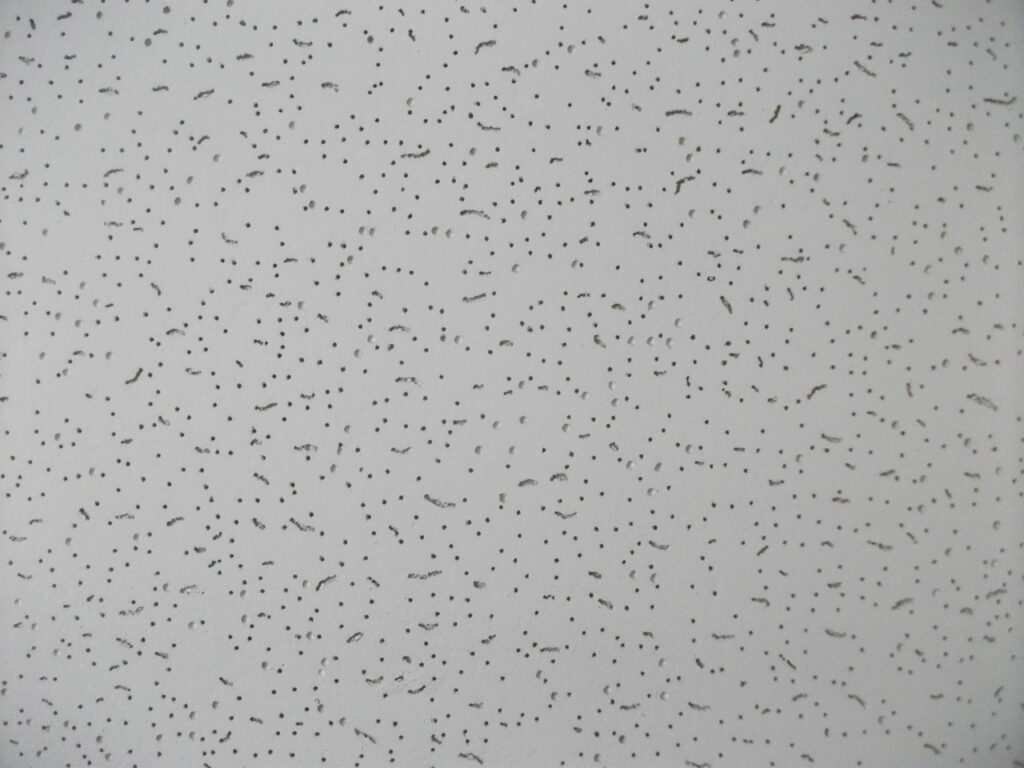
Acoustic ceiling tile featuring small indents and patterns, measured with a tape measure along one edge on a dark surface.
Apr 15, 2026 Uncategorized

What Is the Use of Mineral Fibre False Ceiling?

A mineral fibre false ceiling is used to improve acoustic comfort, thermal insulation, and visual softness in interior spaces. It helps reduce echo, hide wiring, and create a balanced indoor climate. TRUSUS design insight: every ceiling panel shapes how a room feels, not just how it looks. Mineral fibre tiles absorb sound and improve light […]
Read more
Tall stacks of drywall sheets placed neatly in a warehouse, with colorful striped edges visible, indicating orderly storage.
Apr 14, 2026 Uncategorized

What Temperature Can You Install Drywall At?

Drywall should be installed at a temperature of at least 55°F (13°C). Below this point, joint compound and adhesives fail to cure correctly, and paper bonding weakens. TRUSUS environmental insight: correct temperature protects strength from the start. Install conditions matter as much as the board itself. Proper air movement and moderate humidity ensure consistent curing […]
Read more
1 2 3 12

Copyright 2002 - 2026 Trusus | All Rights Reserved | Powered by Trusus