



Drywall tape bubbles appear when joint compound fails to bond evenly beneath the tape.
The root cause is mismatch between material properties and application process.
TRUSUS system insight: bubbles signal a coordination issue, not just a technique problem.
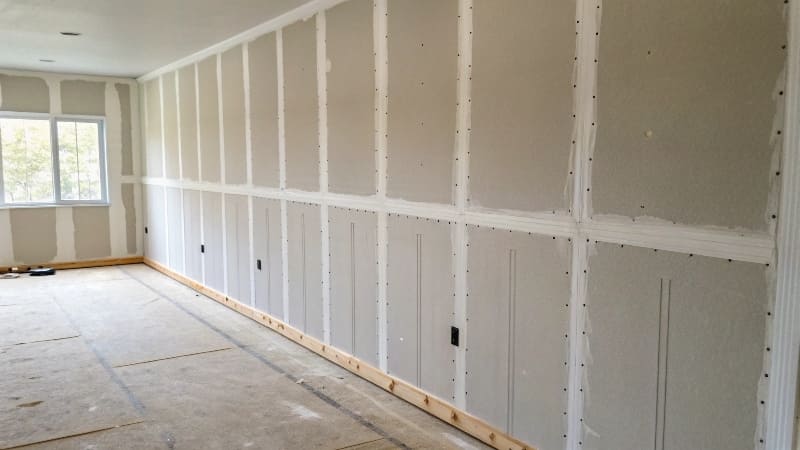
When the compound dries too fast or is too thin, air pockets form underneath.
Uneven water absorption between board, compound, and tape amplifies the gap, resulting in visible bubbles after painting or sanding.
How to Fix Drywall Tape Bulge?
Cut open the bubble, remove loose tape, reapply fresh compound, and embed a new piece of tape.
Press firmly from the center outward to expel trapped air.
TRUSUS repair insight: fix the cause, not the symptom, by restoring compound continuity.
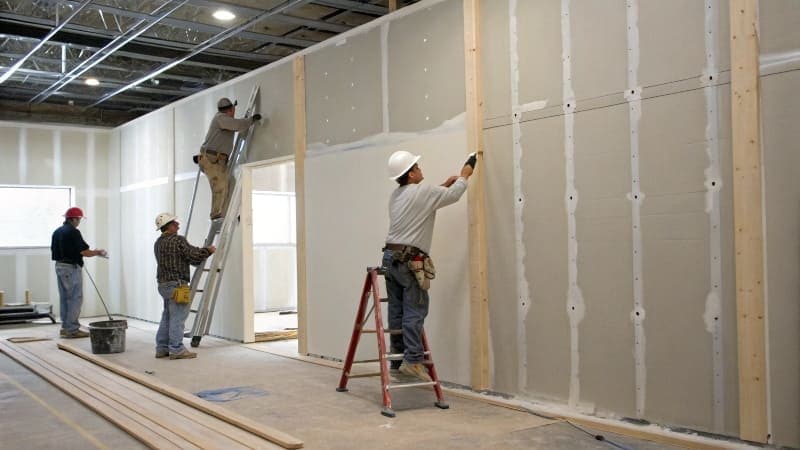
Step‑by‑Step Bulge Repair Guide
| Step | Action | Purpose |
|---|---|---|
| 1 | Cut around bulged tape with a knife | Remove loose material |
| 2 | Scrape away dried compound | Create clean surface |
| 3 | Apply thin layer of fresh compound | Re‑establish bond |
| 4 | Press new tape flat | Remove air pockets |
| 5 | Feather with compound, let dry, sand smooth | Ensure surface alignment |
In my site experience, applying too thick a coat during repair often causes another bulge.
Thin and even layers make the wall recovery seamless.
What Causes Bubbles When Applying Joint Compound?
Bubbles arise from trapped air, mismatched drying rates, or incompatible material brands.
They happen when compound viscosity and tape absorption don’t synchronize.
TRUSUS formulation insight: air bubbles reflect chemistry conflict inside the system.
Bubble Source Table
| Cause | Explanation | Prevention Tip |
|---|---|---|
| Too‑dry compound | Sets before embedding tape | Use fresher mix |
| Uneven pressure | Air trapped below tape | Flatten from center |
| Mixed materials | Different shrinkage rates | Use one system brand |
| Over‑sanding before coat | Weak bond on surface | Keep slight roughness |
I have tested compounds from multiple producers.
Only when board, compound, and paper tape come from a unified system do bubbles drop dramatically, showing that consistency beats improvisation.
Why Is My Drywall Tape Bumpy?
Uneven surface or swelling tape appears when compound layers vary in thickness or dry unevenly.
Humidity swings, poor mixing, and non‑standard boards add to irregularity.
TRUSUS aesthetic insight: smoothness shows system stability.
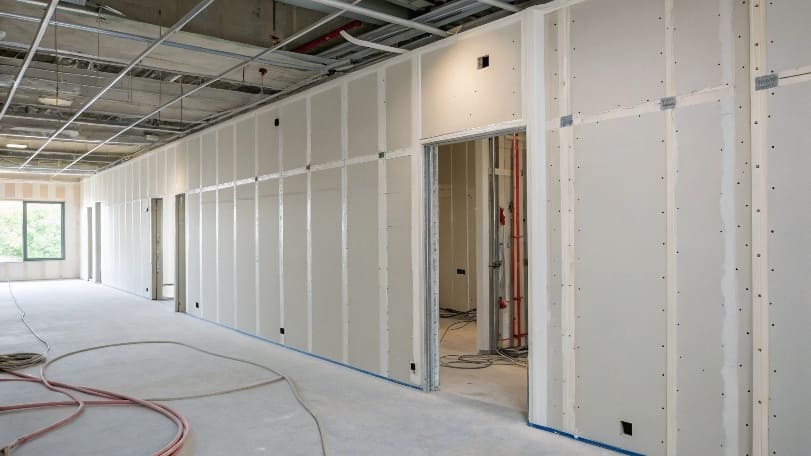
Smoothing Checklist
| Factor | Impact | Solution |
|---|---|---|
| Compound thickness | Surface waves | Apply thin coats in succession |
| Room humidity | Extended drying | Maintain 20‑25 °C, moderate RH |
| Tape absorption | Local swelling | Use compatible tape |
| Sanding phase | Uneven feather | Finish with lightweight compound |
In one training, we controlled room humidity and standardized board moisture before taping.
Every seam came out flat, proving smoothness comes from system awareness, not just hand skill.
Conclusion
At TRUSUS, I believe drywall tape bubbles reveal more than poor technique—they point to fragmented systems.
Solving them means aligning materials, methods, and understanding into one resilient wall solution.