



Drywall stacking means how gypsum boards are placed and stored before installation. It protects boards from bending, moisture, and surface damage during transport and storage.
TRUSUS manufacturing insight: stacking is not only storage—it’s the first step of quality control.

Drywall should always be laid flat, supported evenly, and kept in a dry environment. This keeps the gypsum core stress balanced and the paper surface flat for later finishing.
Drywall Stacking Principles
| Principle | Description | Importance |
|---|---|---|
| Flat Placement | Boards lying horizontally | Prevents warping |
| Even Support | Supports every 400‑450mm | Avoids bending |
| Dry Storage | Off the floor, away from damp | Stops moisture damage |
| Limited Height | Generally under 1m | Avoids compression |
| Clean Surface | No sharp debris beneath | Protects paper layer |
Following these principles ensures the board’s strength and accuracy at installation.
How Should Plasterboard Be Stacked?
Plasterboard should be stacked flat on pallets or level bearers with full edge support. Never store vertically against walls or uneven ground, as that leads to curve distortion.
TRUSUS handling insight: how you lay the sheet defines how it will lie on your wall.
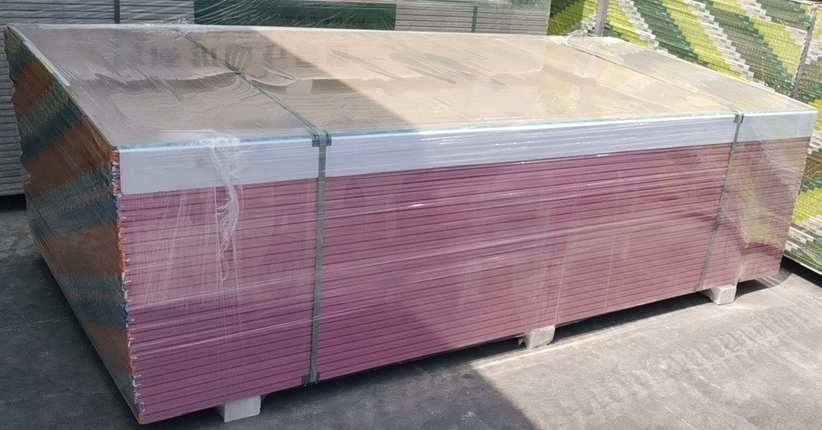
Plasterboard Storage Setup
| Step | Action | Reason | Result |
|---|---|---|---|
| 1 | Use level base or pallet | Stabilize foundation | Keep edges aligned |
| 2 | Add protective sheet below | Block floor moisture | Long‑term dryness |
| 3 | Stack by same size | Even pressure | Prevent corner stress |
| 4 | Limit layer count | Reduce compression | Maintain flatness |
Proper stacking keeps the paper surface tight and ready for finishing compounds without damage.
How Do You Stack and Store Gypsum Wallboard?
To store gypsum wallboard, keep it flat, supported, and climate‑controlled. Avoid exposure to rain or direct sun, and cover it with a breathable sheet to manage humidity.
TRUSUS storage insight: gypsum breathes like air—give it space, not pressure.
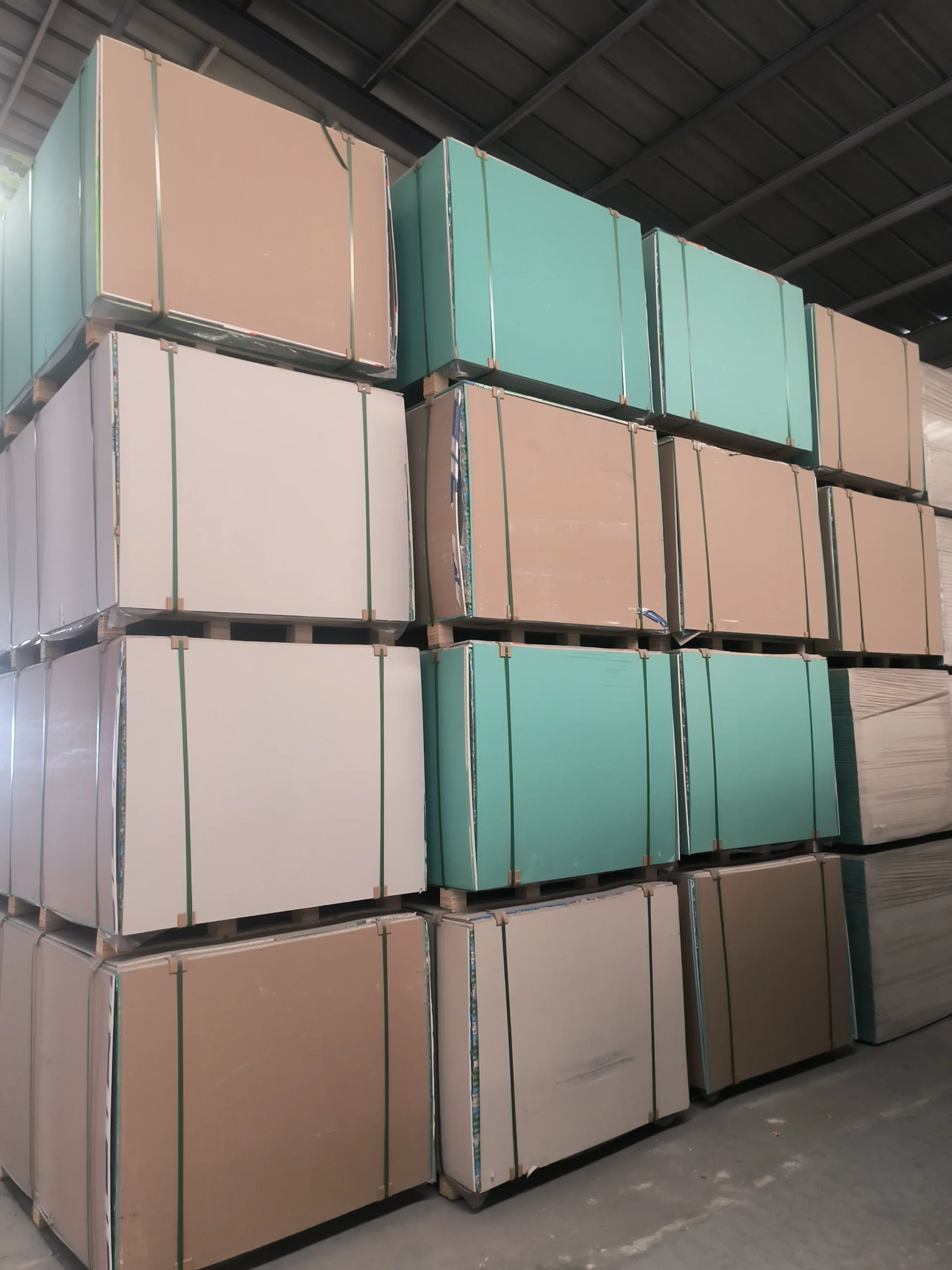
Warehouse Practice
| Storage Factor | Recommended Action | Purpose |
|---|---|---|
| Floor Contact | Keep at least 100mm off ground | Moisture isolation |
| Temperature | Maintain between 10–30°C | Avoid thermal stress |
| Humidity | Keep below 60% | Prevent panel swelling |
| Air Movement | Allow air circulation | Balance moisture level |
| Cover | Use breathable protection | Avoid condensation |
Controlled conditions preserve the gypsum’s internal balance and paper bond strength.
How High Should Drywall Be Stacked?
Drywall stacking height should not exceed one meter or about 15 boards. Excessive stacking compresses lower sheets, causing core deformation and uneven edges.
TRUSUS safety insight: height isn’t efficiency—it’s stress; balance matters more than quantity.
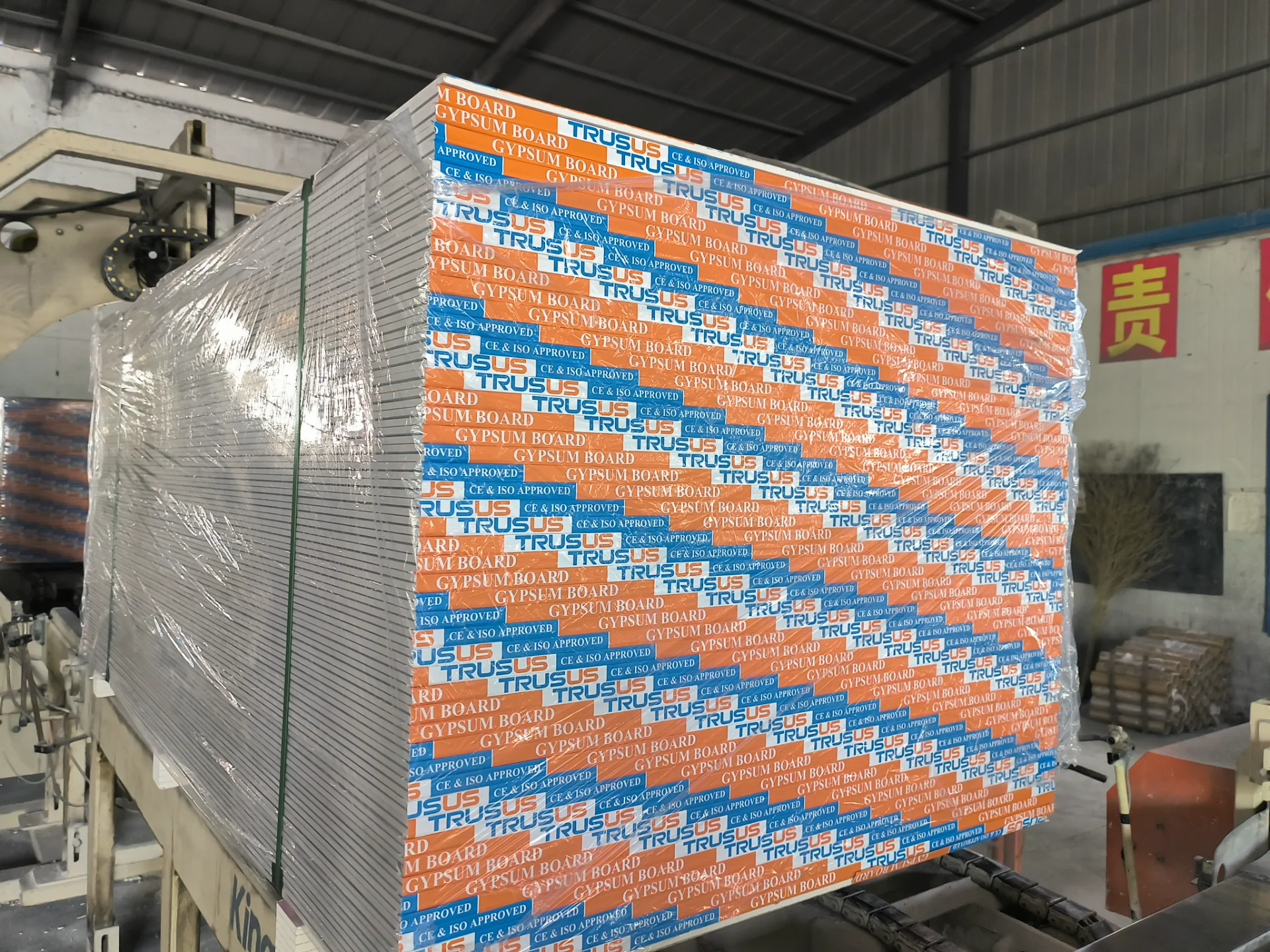
Height Limitation Guide
| Parameter | Recommended Limit | Reason |
|---|---|---|
| Maximum Stack Height | 900–1000mm | Prevent board stress |
| Total Weight per Stack | Under 900 kg | Avoid pallet overload |
| Support Interval | Every 450mm | Keep load distributed |
| Site Stacking Count | 10–15 sheets | Easy manual handling |
Height control prevents distortion before boards reach installation—a simple rule that saves finishing time.
Conclusion
At TRUSUS, I see drywall stacking as the beginning of every quality wall. How boards rest today decides how walls stand tomorrow—precision, care, and balance define true building excellence.