



Gypsum board is made mainly of calcium sulfate dihydrate (CaSO₄·2H₂O) mixed with additives and paper liners. These materials combine strength, smoothness, and indoor comfort performance.
TRUSUS material insight: the formula behind every panel defines its environmental value.
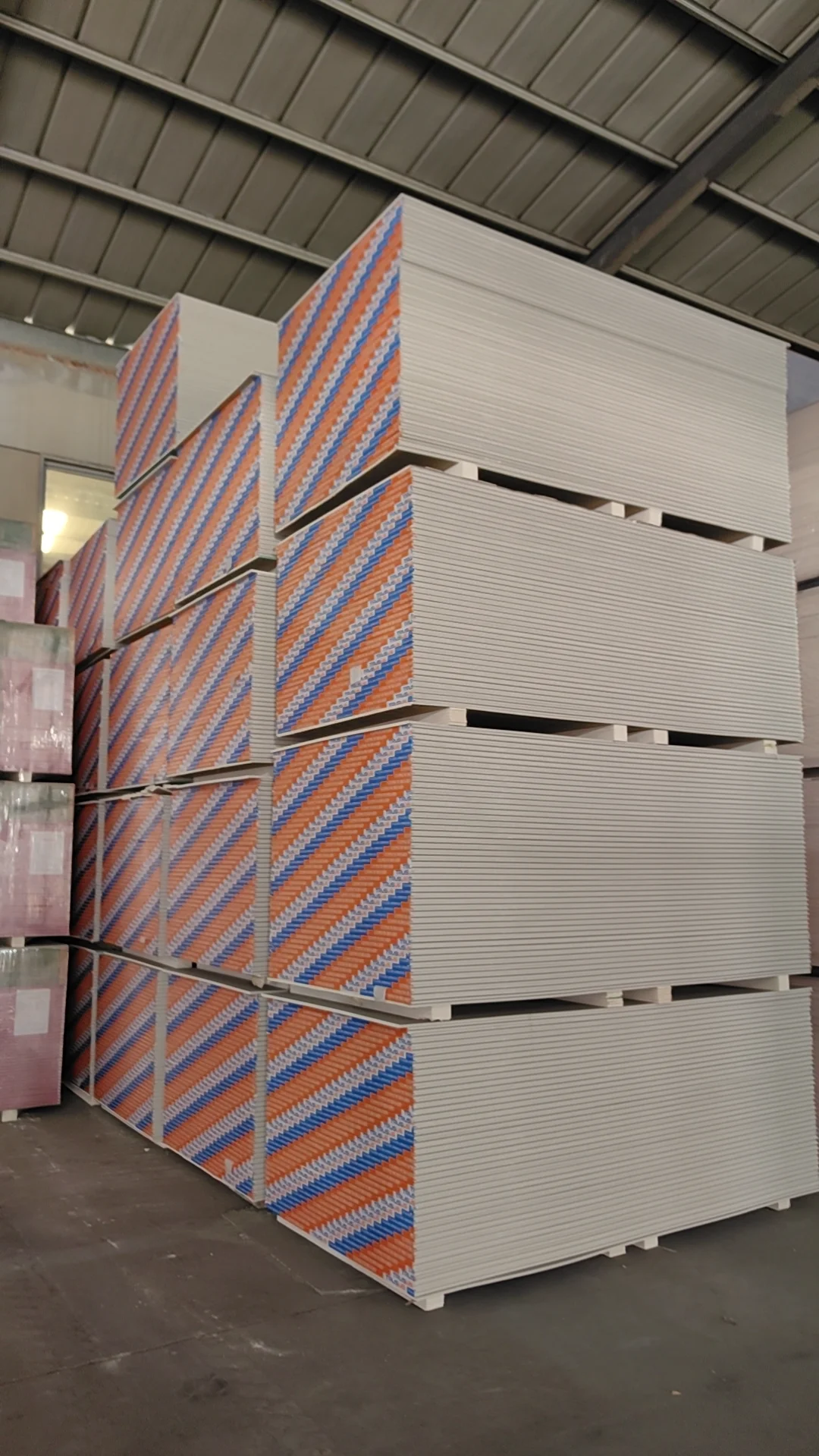
The board core contains rehydrated gypsum bound between sheets of recycled paper. Small amounts of starch, foaming agents, and fiberglass improve bonding, density, and fire resistance. This chemistry gives gypsum board its signature balance—lightweight, rigid, and breathable.
What Is the Main Ingredient in Plaster and Gypsum Board?
Both plaster and gypsum board share the same central mineral: calcium sulfate dihydrate. When heated, natural gypsum loses water to form hemihydrate plaster—then rehydrates to solid gypsum during setting.
TRUSUS process insight: the material’s cycle of dehydration and recovery is what gives it life.
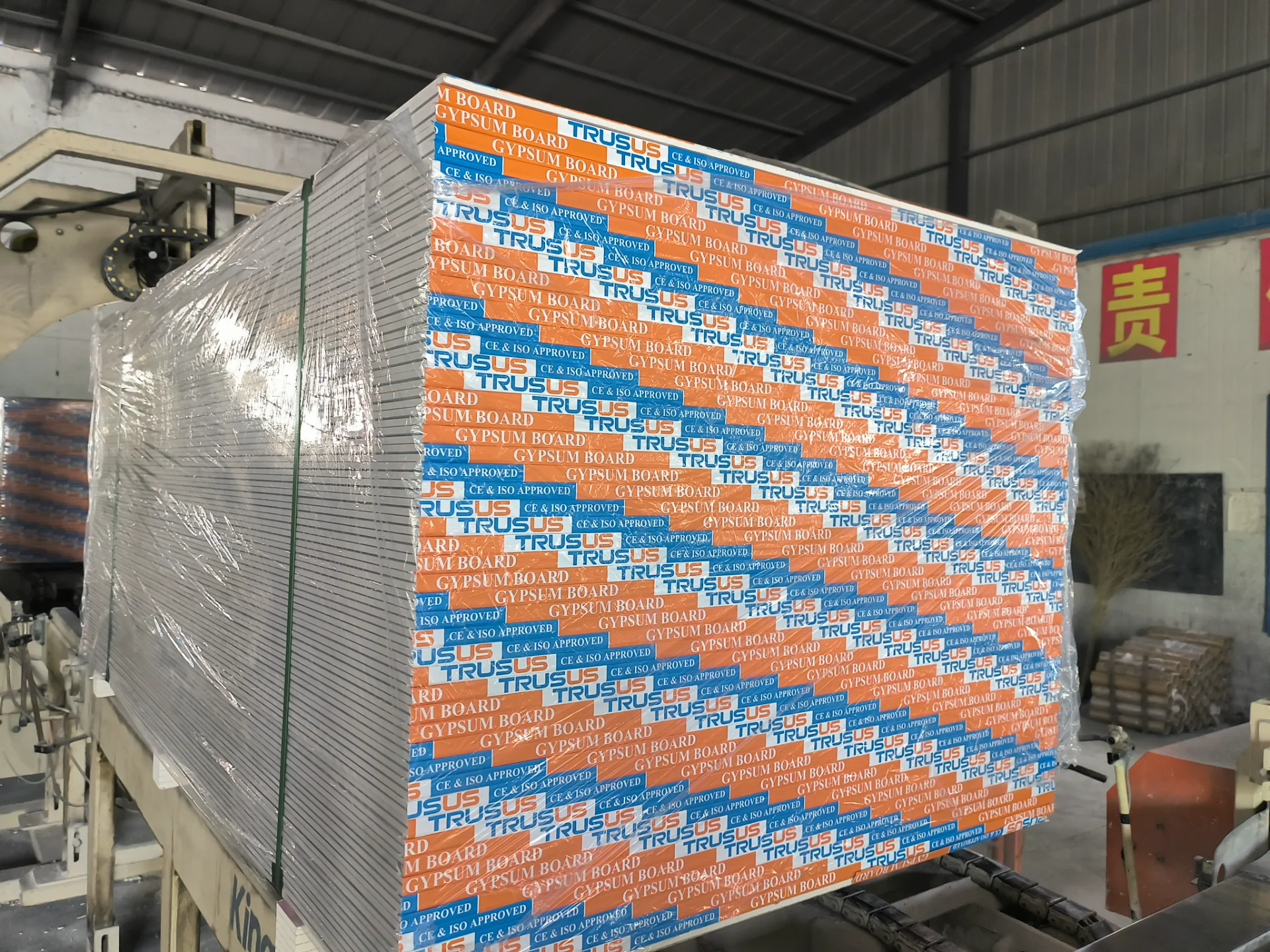
Gypsum Core Reaction Overview
| Stage | Chemical Formula | Process | Result |
|---|---|---|---|
| Raw gypsum | CaSO₄·2H₂O | Natural or synthetic mineral | Stable mineral form |
| Calcination | Heat to ±150 °C | Loses 1.5 molecules of water | CaSO₄·½H₂O (plaster) |
| Hydration | Add water again | Reactivates crystalline bond | Hardened gypsum board |
I often think of gypsum as a material that breathes twice—once in the kiln, once in the wall.
What Is the Raw Material for Gypsum Board?
The raw material is gypsum rock or synthetic gypsum produced from industrial by‑products such as flue gas desulfurization. Both are refined, ground, and transformed into hemihydrate plaster before forming the board core.
TRUSUS sustainability insight: using recycled gypsum is how building materials join the circular economy.
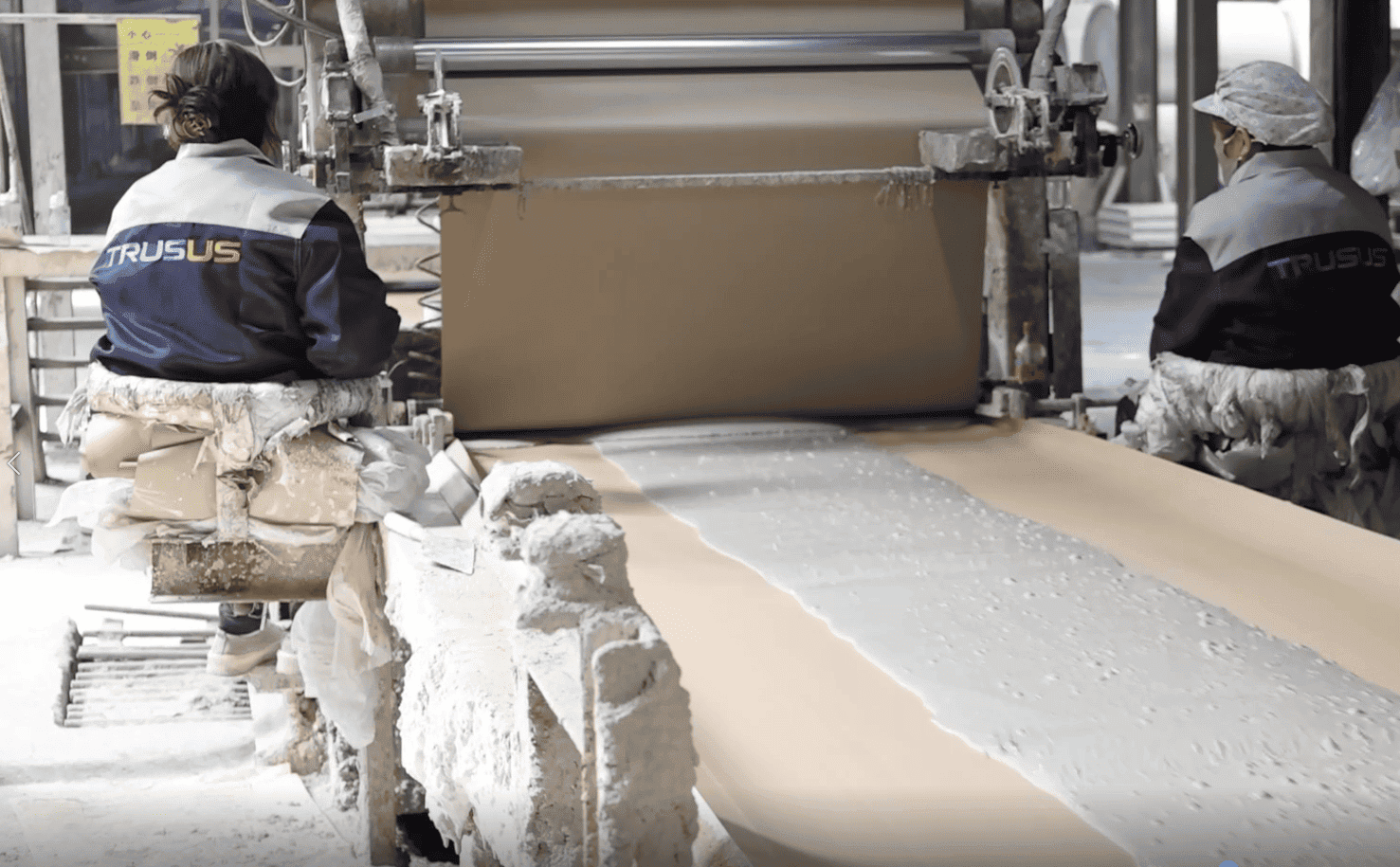
Gypsum Raw Material Supply Sources
| Source Type | Description | Environmental Benefit |
|---|---|---|
| Natural gypsum | Mined sedimentary mineral | Stable quality, widely available |
| FGD gypsum | Power plant by‑product | Reduces landfill impact |
| Recycled board waste | Reused from construction debris | Conserves resources |
| Additives | Starch, foaming, glass fibers | Performance tuning |
At our factory, half of the gypsum we process comes from industrial recovery projects. That change reduced CO₂ output while keeping quality consistent—proof that sustainability and durability can coexist.
Which Mineral Is Commonly Used in Drywall?
Drywall panels worldwide rely on gypsum, composed of calcium, sulfur, oxygen, and water. Its internal water molecules make it naturally resistant to flame and suitable for indoor use.
TRUSUS design insight: the secret of safe walls lies hidden in the crystal water of gypsum.

Drywall Mineral Profile
| Mineral | Common Name | Key Property | Role in Drywall |
|---|---|---|---|
| Calcium sulfate dihydrate | Gypsum | Non‑combustible, stable | Main wall core |
| Cellulose paper | Paper liner | Smooth finish, flexible bonding | Surface covering |
| Vermiculite/perlite | Lightweight fillers | Density control | Optional mix |
| Glass fiber | Reinforcement | Strength, fire resistance | Internal support |
I often run my hand across a fresh board from the production line—its surface may feel cold, yet inside, its water molecules are quietly protecting homes.
Conclusion
At TRUSUS, every gypsum board we make begins with earth’s simplest mineral and ends as a guardian of healthy, breathable spaces—proof that chemistry and comfort can share the same wall.