



To check gypsum false ceiling boards, inspect surface flatness, edge quality, thickness consistency, paper bonding, moisture resistance, and overall board strength. A good gypsum board should feel solid, look smooth, and show no signs of swelling, cracking, or paper separation.
TRUSUS quality insight: customers are no longer satisfied with simple product labels. They increasingly want direct proof of quality and long-term reliability.
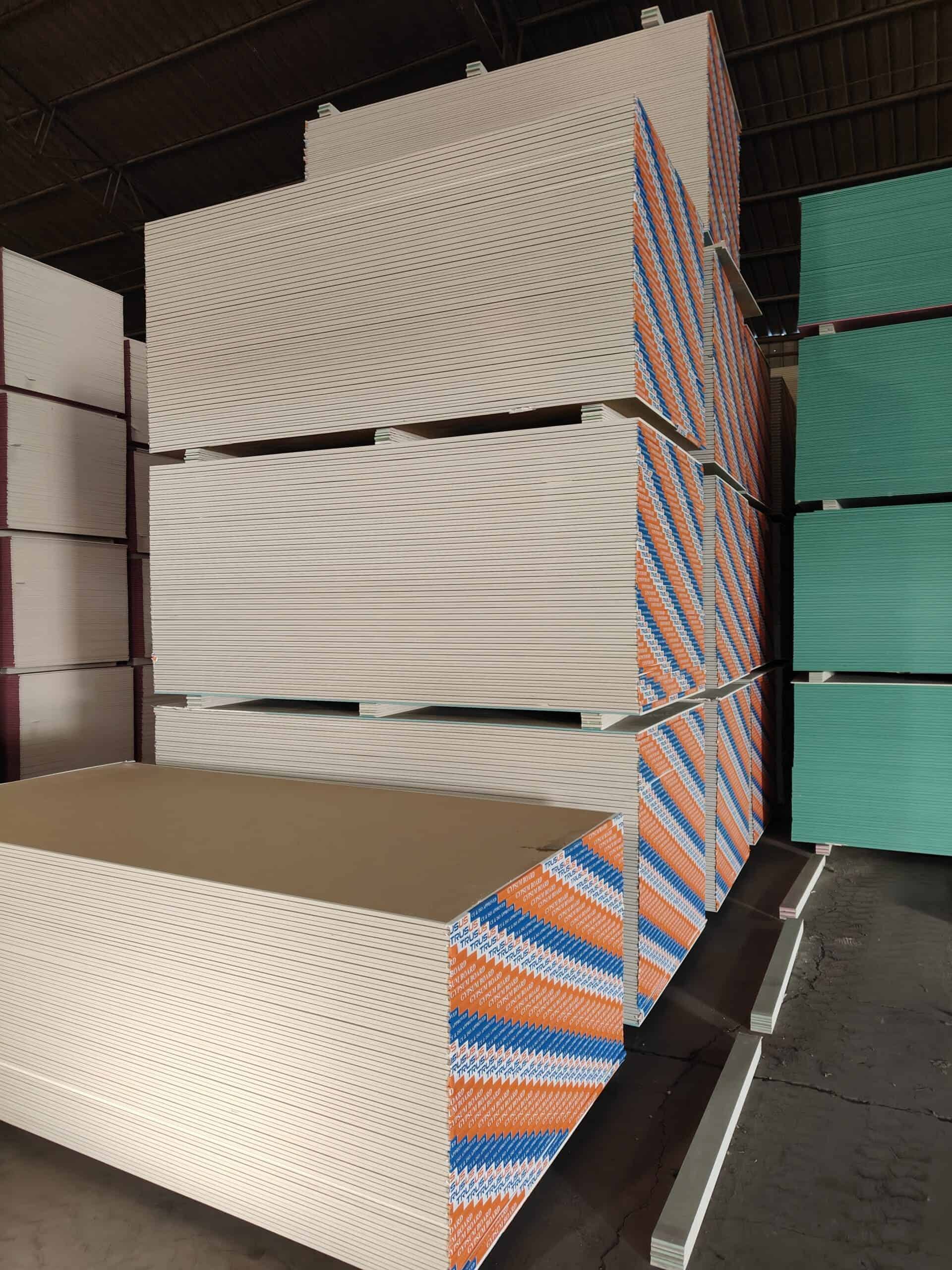
I have noticed that many buyers now inspect gypsum boards much more carefully before purchasing.
This shift reflects growing concerns about inconsistent product quality in the market.
Surface Inspection Checklist
| Inspection Area | What To Look For |
|---|---|
| Board surface | Smooth and even finish |
| Corners and edges | Clean cuts without damage |
| Paper facing | Tight bonding without bubbles |
Visible defects often indicate poor manufacturing control.
Thickness And Dimensional Consistency
| Quality Factor | Good Board Characteristic |
|---|---|
| Thickness uniformity | Consistent across the board |
| Length and width accuracy | Precise dimensions |
| Flatness | Minimal warping |
Dimensional accuracy affects installation quality.
Strength And Rigidity Checks
| Manual Check | Expected Result |
|---|---|
| Light bending pressure | Strong resistance |
| Edge handling | No crumbling |
| Surface pressing | Firm structure |
Weak boards often fail during transport or installation.
Moisture And Storage Inspection
| Warning Sign | Possible Problem |
|---|---|
| Swollen edges | Moisture exposure |
| Yellow stains | Water damage |
| Soft core areas | Poor storage conditions |
Moisture can seriously reduce board performance.
Why Customers Are Becoming More Careful
| Earlier Buying Behavior | Current Market Behavior |
|---|---|
| Price-focused purchasing | Quality verification focus |
| Trusting dealer recommendations | Independent product inspection |
| Brand recognition reliance | Technical evaluation reliance |
Buyers increasingly want to avoid hidden quality risks.
The Industry Change Behind These Questions
| Traditional Gypsum Board Market | Modern Quality Transparency Market |
|---|---|
| Product-focused competition | Trust-focused competition |
| Marketing-driven sales | Verification-driven sales |
| Limited technical communication | Open quality education |
I believe manufacturers who openly teach quality inspection methods will build stronger long-term customer trust.
What Does A Gypsum Board Look Like?
A standard gypsum board usually has a smooth paper-covered surface, an ivory white or light gray gypsum core, and neatly finished edges. Most boards have colored paper facings or printed markings that identify board type and manufacturer.
TRUSUS appearance insight: visual identification has become an important first step in quality evaluation and counterfeit prevention.
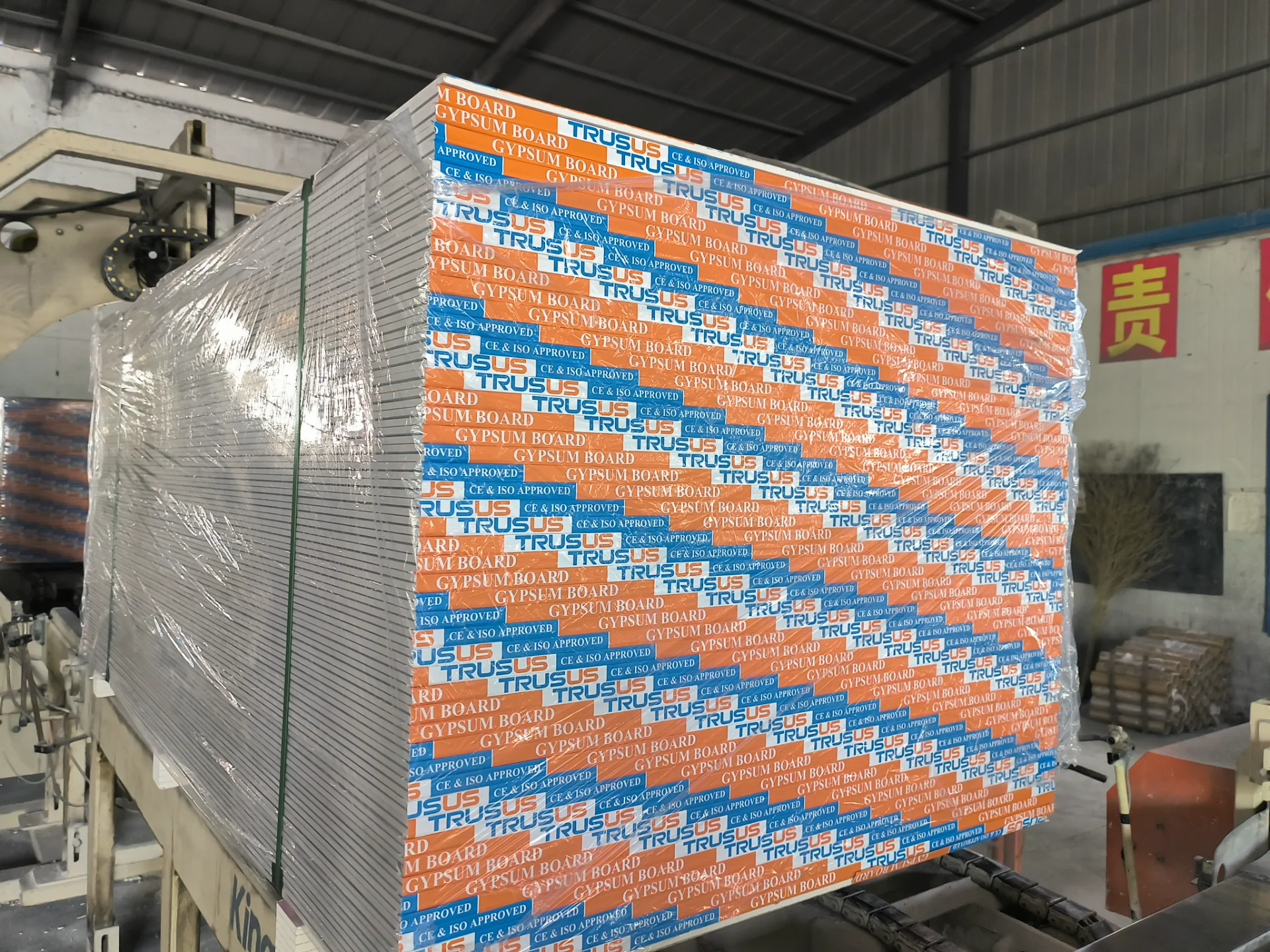
Many customers now want to understand how genuine gypsum boards should appear before making purchasing decisions.
Visual details often reveal manufacturing quality.
Basic Appearance Features
| Board Feature | Typical Appearance |
|---|---|
| Front paper surface | Smooth and uniform |
| Back paper layer | Clean and firmly attached |
| Gypsum core | Light-colored mineral center |
Good boards maintain visual consistency.
Common Edge Types
| Edge Style | Application Purpose |
|---|---|
| Tapered edge | Joint finishing systems |
| Square edge | Simple installations |
Edge precision affects finishing quality.
Printed Markings On Boards
| Printed Information | Purpose |
|---|---|
| Brand name | Product identification |
| Board type | Technical classification |
| Production codes | Traceability support |
Clear markings improve transparency and quality tracking.
Surface Quality Indicators
| Visual Indicator | Quality Meaning |
|---|---|
| Uniform paper texture | Stable production process |
| Clean edges | Precise cutting control |
| No visible delamination | Strong paper bonding |
Appearance inspection is often the first quality filter.
Why Appearance Recognition Matters More Today
| Earlier Market Conditions | Current Market Conditions |
|---|---|
| Fewer counterfeit products | Increased imitation risks |
| Basic visual comparison | Detailed quality examination |
| Dealer trust dependency | Independent customer verification |
Customers increasingly want direct confidence in product authenticity.
Why Transparency Is Becoming Essential
| Older Sales Approaches | Modern Trust-Building Approaches |
|---|---|
| General product claims | Detailed visual identification guidance |
| Brand-only promotion | Technical transparency support |
| Limited customer education | Active quality awareness education |
I increasingly see visual transparency becoming part of modern product credibility.
What Are The Key Features Of Gypsum Board?
The key features of gypsum board include fire resistance, smooth finishing surfaces, lightweight structure, sound insulation, dimensional stability, and easy installation. Specialized boards may also provide moisture resistance, mold resistance, or enhanced fire protection.
TRUSUS product insight: gypsum board is no longer valued only for convenience and cost efficiency. Its performance characteristics now directly influence building safety and comfort expectations.
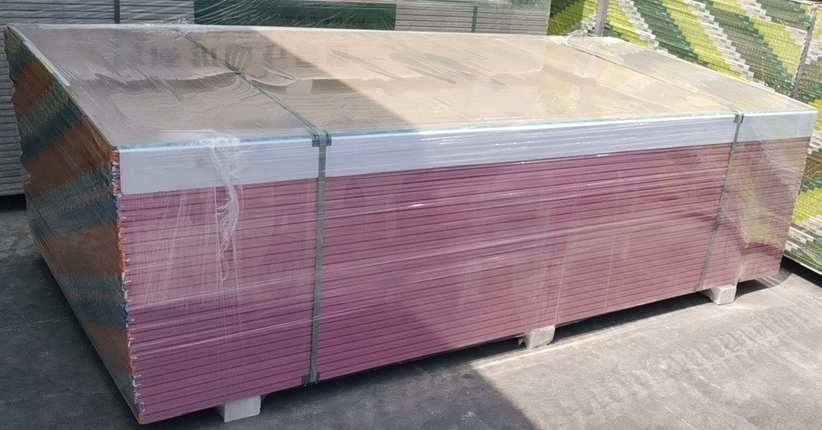
Modern construction projects demand much more from interior materials than in the past.
Performance standards continue rising globally.
Core Performance Features
| Feature | Main Benefit |
|---|---|
| Fire resistance | Slower heat transfer |
| Lightweight structure | Easier handling |
| Smooth surface | Better decorative finish |
These features support efficient interior construction.
Acoustic And Thermal Performance
| Performance Area | Functional Value |
|---|---|
| Sound insulation | Improved indoor comfort |
| Thermal stability | Better environmental control |
Gypsum systems contribute to overall building performance.
Moisture And Mold Resistance Options
| Board Type | Typical Application |
|---|---|
| Standard gypsum board | Dry indoor areas |
| Moisture-resistant board | Kitchens and bathrooms |
| Mold-resistant board | Humid environments |
Specialized boards address different building conditions.
Installation Advantages
| Construction Benefit | Practical Impact |
|---|---|
| Easy cutting | Faster installation |
| Compatible fastening systems | Reduced labor complexity |
| Smooth joint finishing | Cleaner appearance |
Installation efficiency remains one of gypsum board’s major advantages.
Why Customers Ask More About Features Today
| Earlier Buyer Focus | Modern Buyer Focus |
|---|---|
| Basic wall partition needs | Long-term performance expectations |
| Low-cost solutions | Safety and comfort balance |
| Standard specifications | Application-specific performance |
Customers increasingly compare functional performance, not only price.
The Market Shift Happening Now
| Traditional Gypsum Board Competition | Modern Building Performance Competition |
|---|---|
| Commodity material pricing | Technical value differentiation |
| Simple product supply | System performance support |
| Volume-driven sales | Quality-driven reputation |
I believe future gypsum board competition will depend heavily on measurable performance transparency and technical education.
How To Identify Gypsum Board?
You can identify gypsum board by checking printed markings, board weight, paper quality, edge precision, core appearance, and manufacturer certifications. Authentic quality boards usually show consistent density, strong paper adhesion, and clear product traceability information.
TRUSUS identification insight: product identification is becoming a critical skill as customers seek protection from low-quality and counterfeit materials.

Many buyers now worry about fake products and hidden quality problems.
This concern is changing purchasing behavior across the industry.
Brand And Label Verification
| Identification Method | What To Check |
|---|---|
| Printed logos | Clear and consistent branding |
| Certification labels | Compliance documentation |
| Batch codes | Production traceability |
Reliable manufacturers provide traceable information.
Physical Quality Identification
| Inspection Method | Quality Signal |
|---|---|
| Weight comparison | Consistent density |
| Edge inspection | Clean cutting quality |
| Surface touch | Smooth and firm paper layer |
Low-quality boards often feel weak or uneven.
Core Structure Inspection
| Cross-Section Check | Expected Observation |
|---|---|
| Gypsum core color | Uniform light appearance |
| Core consistency | Compact internal structure |
| Paper adhesion | Strong bonding |
Internal structure reveals manufacturing quality.
Simple On-Site Testing Methods
| Practical Test | Expected Result |
|---|---|
| Paper tear resistance | Strong attachment |
| Gentle tapping | Solid sound |
| Flex resistance | Stable board integrity |
Basic field tests help identify weak materials quickly.
Why Independent Identification Skills Matter
| Earlier Market Trust Model | Current Market Trust Model |
|---|---|
| Dependence on suppliers | Independent customer verification |
| Brand assumption trust | Evidence-based trust |
| Limited technical awareness | Growing quality literacy |
Customers increasingly want direct control over quality decisions.
Why Transparency Is Reshaping Competition
| Older Industry Practices | Emerging Industry Practices |
|---|---|
| Information asymmetry | Open quality communication |
| Marketing-driven positioning | Verification-driven positioning |
| Limited customer education | Active technical guidance |
Manufacturers who support customer education often gain stronger market credibility.
The Future Of Quality Trust
| Traditional Product Sales | Transparent Quality Ecosystems |
|---|---|
| Product delivery focus | Full traceability support |
| Reactive quality discussions | Proactive quality education |
| Generic branding | Verifiable technical identity |
I believe the future gypsum board market will increasingly reward manufacturers who combine strong product quality with clear technical transparency.
Conclusion
At TRUSUS, I see gypsum board purchasing evolving from simple price comparison into informed quality verification. Future market leadership will belong to manufacturers who combine reliable products, transparent standards, and strong customer education.