



You can’t attach a ceiling fan directly to PVC gypsum ceiling tiles. These tiles are decorative surface panels, not structural elements. Fan weight must hang from independent suspension rods or a solid ceiling frame.
TRUSUS ceiling insight: the tile covers the system—it doesn’t carry the load.
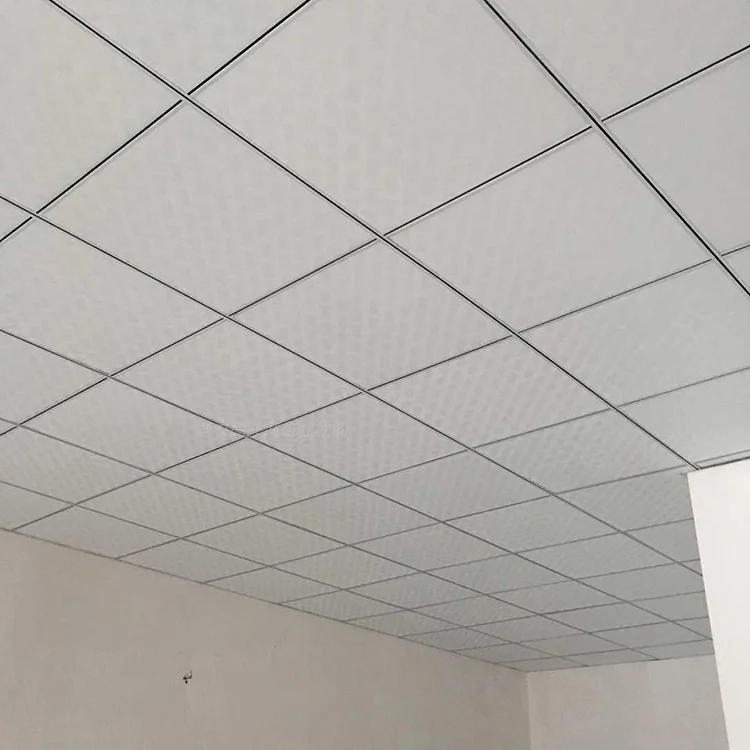
When installing a fan, use a separate ceiling junction box fixed to the concrete slab or steel framework above. Then, cut a neat circular access in the tile for the downrod. This keeps the ceiling visually clean while protecting its structure.
Ceiling Support Logic
| Element | Function | Load Type | Recommendation |
|---|---|---|---|
| PVC Gypsum Tile | Finish surface | Non‑load | Use only as cover |
| Suspension Grid | Light support | Ceiling weight | Not enough for fans |
| Anchor Rod | Heavy load transfer | Dynamic | Connect to main slab |
| Decorative Ring | Visual finishing | None | Covers fan hole edges |
Understanding this separation between structure and finish ensures both safety and design clarity.
Can HVAC Vents Be Installed in a Gypsum Ceiling?
Yes, HVAC vents can be integrated into a gypsum ceiling if proper framing and spacing support their weight. Cut openings precisely and reinforce edges before fitting diffusers or grilles.
TRUSUS HVAC integration insight: airflow works best when structure and mechanics share one precise rhythm.
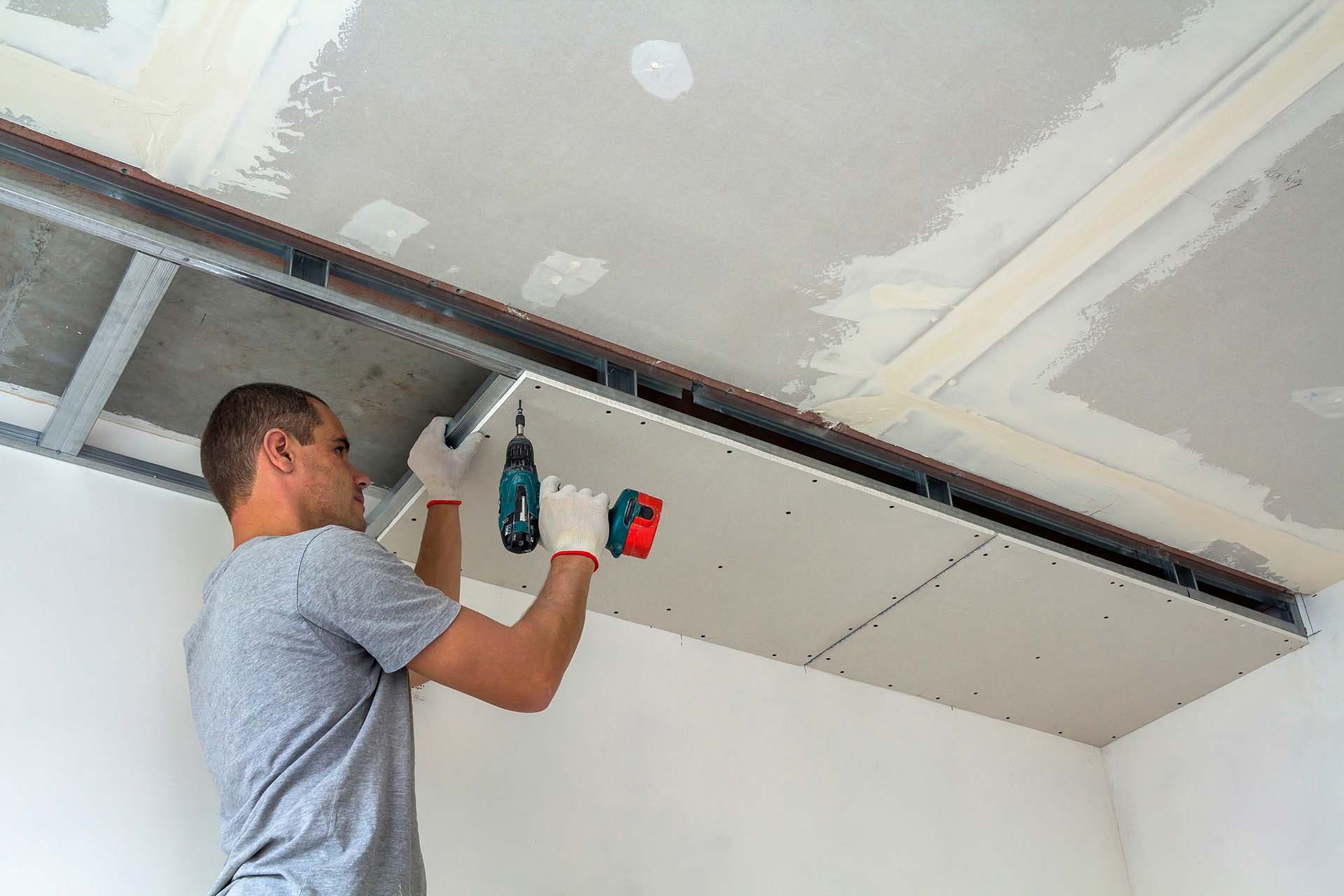
Vent Integration Guide
| Step | Details | Purpose |
|---|---|---|
| 1 | Plan vent positions along grid lines | Aligns with system modules |
| 2 | Add perimeter frame around cutout | Distributes load |
| 3 | Connect with flexible duct | Reduces vibration |
| 4 | Seal joints with insulation tape | Prevents air leakage |
| 5 | Fix grille or diffuser flush | Smooth, aesthetic finish |
A gypsum ceiling becomes a platform for clean HVAC integration when framing detail balances airflow and aesthetic demand.
Can You Put an Exhaust Fan in a PVC Gypsum Ceiling Tile Grid?
Yes, but the exhaust fan must be mounted to an independent support, not to the PVC gypsum tile or light frame alone. The tile simply allows for passage or cover around the fan unit.
TRUSUS ventilation insight: the tile presents the opening, but the frame behind holds the function.
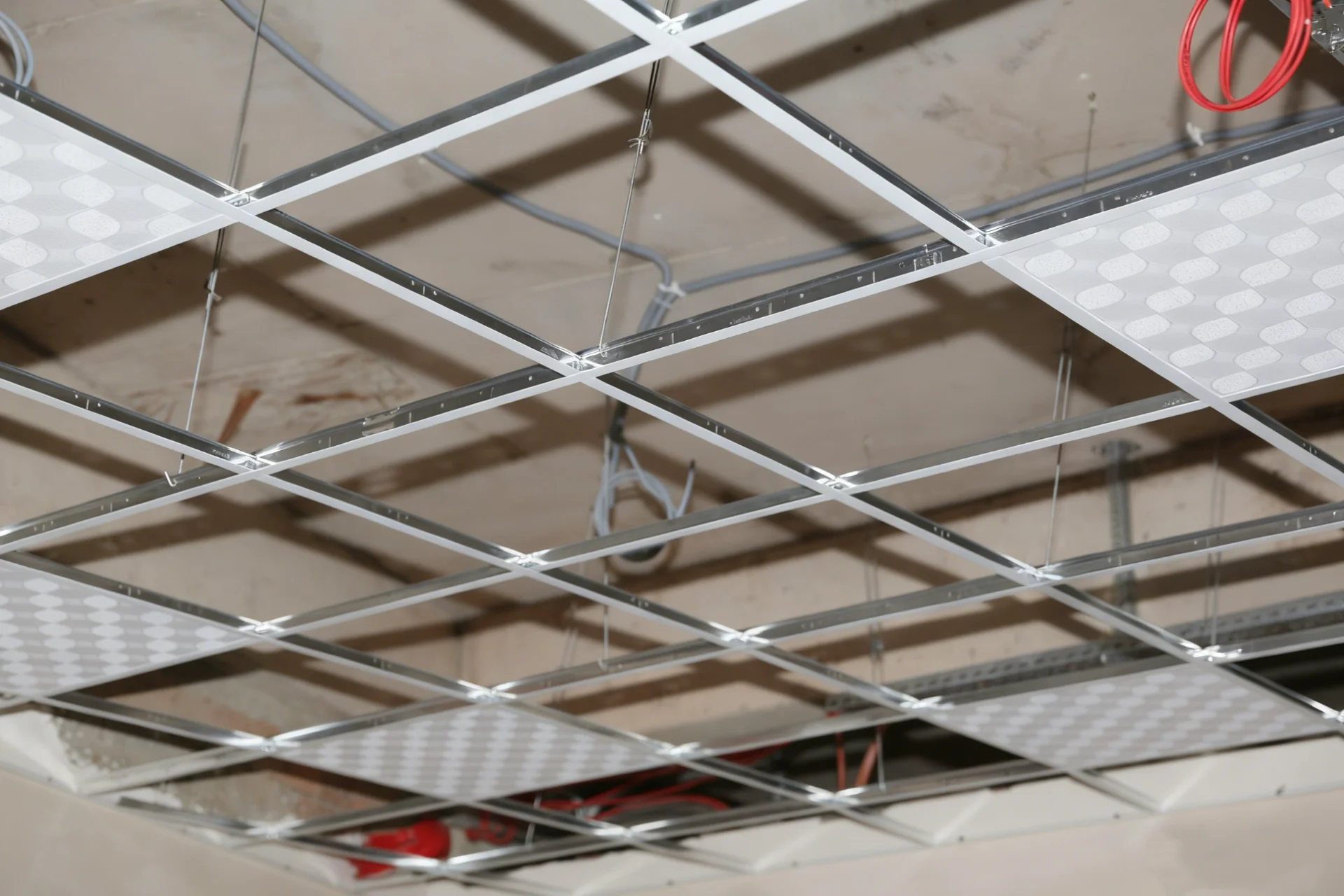
Exhaust Fan Installation Sequence
| Component | Role | Recommendation |
|---|---|---|
| Top Frame | Structural anchor | Connect direct to ceiling joist or slab |
| Flexible Duct | Air link | For heat and vibration isolation |
| PVC Gypsum Tile Cutout | Interface opening | Trim precisely using hole saw |
| Seal Ring | Air sealing and aesthetics | Prevent dust and backdraft |
This method maintains both airflow performance and the integrity of the modular tile layout.
How to Hide Exposed Ductwork in a Gypsum Ceiling?
To hide ductwork, use recessed channels or lowered gypsum ceiling sections that form plenums for air circulation. The goal is an invisible system that still provides easy access for maintenance.
TRUSUS design insight: concealment isn’t hiding—it’s organizing structure with purpose.
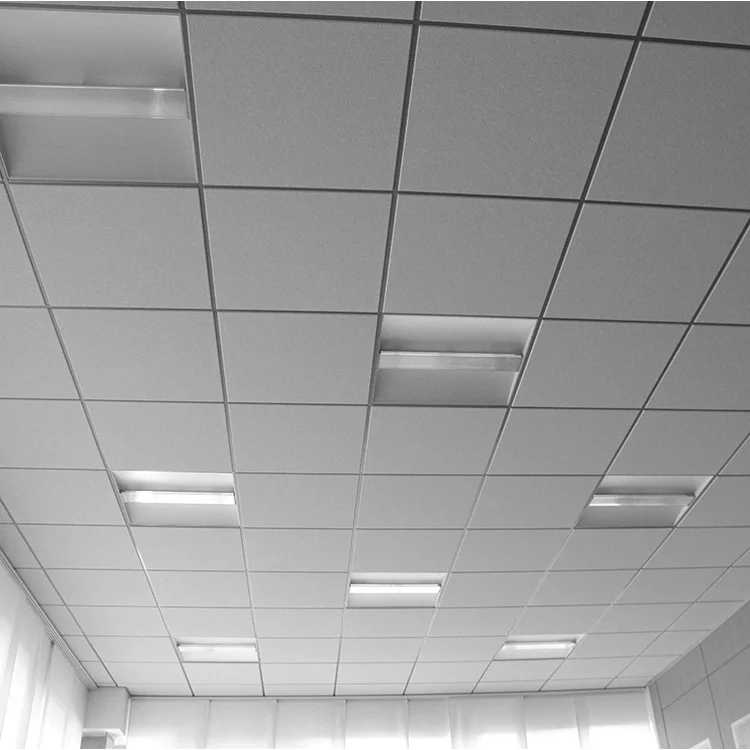
Duct Concealment Strategy
| Design Element | Function | Recommended Material | Maintenance Access |
|---|---|---|---|
| Drop Ceiling Zone | Hides ducts | Gypsum + PVC tiles | Openable panels |
| Access Hatch | Inspection and cleaning | Aluminum or steel | Hinged or magnetic latch |
| Light Cove | Combined diffusion and concealment | Gypsum cove profile | Removable for service |
| Insulation Layer | Reduces noise and condensation | Fiberglass wrap | Keep dry and sealed |
By blending duct layout with gypsum ceiling geometry, designers reconcile aesthetics with airflow integrity.
Conclusion
At TRUSUS, I see every ceiling design as a dialogue between decoration and engineering. PVC gypsum ceilings become more than surface panels—they act as the intelligent interface where fans, ducts, and vents meet architecture itself.