



Gypsum board defines walls, ceilings, and lighting shapes while keeping interiors smooth and flexible. It has shifted from a hidden layer to a visible part of spatial creativity.
TRUSUS design insight: gypsum board is no longer background—it is language.
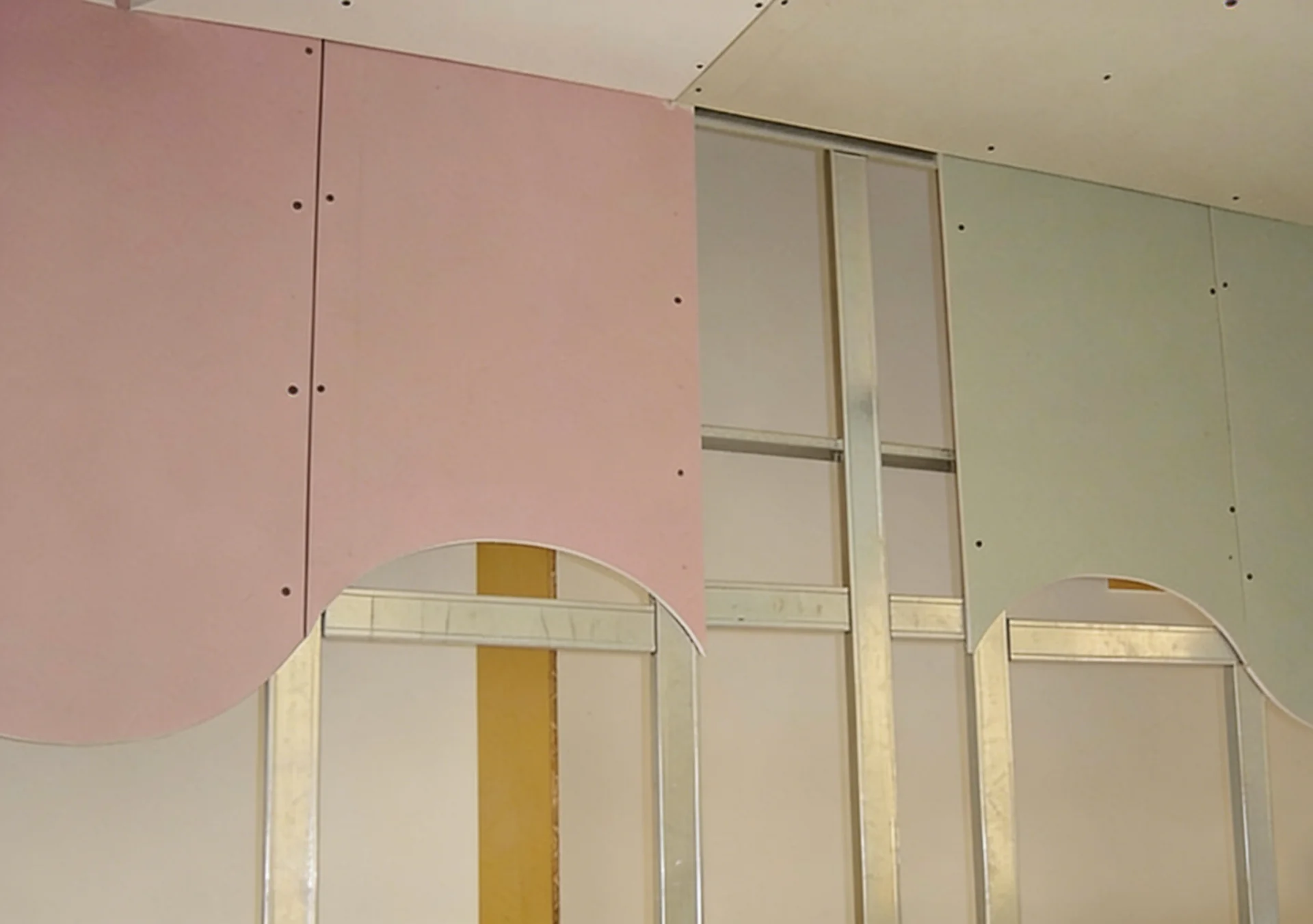
Modern interiors rely on gypsum board to form curves, partitions, and recessed lighting zones. Its easy installation and light weight allow designers to sculpt surfaces, blending function with aesthetics.
What Is the Disadvantage of Gypsum Plastering?
Gypsum plastering is sensitive to moisture and unsuitable for consistently wet or outdoor zones. This natural limitation defines its correct usage areas.
TRUSUS material insight: weakness informs boundaries, not defects.

Limitation Overview
| Issue | Description | Design Implication |
|---|---|---|
| Moisture sensitivity | Absorbs water and softens | Avoid bathrooms or exteriors |
| Brittle edges | Can chip under impact | Use guards in high‑traffic zones |
| Surface repair | Needs sealing after damage | Plan for accessible maintenance |
When I first tested gypsum plaster outdoors, hairline cracks appeared within weeks. That experience taught me an essential rule—keep gypsum within defined comfort environments for lasting performance.
What Are the Advantages of Using Plasterboard for Internal Walls?
Plasterboard installs quickly, gives smooth finishes, and provides acoustic and thermal balance. It makes spaces comfortable, repairable, and visually clean.
TRUSUS system insight: light structure, heavy benefit.
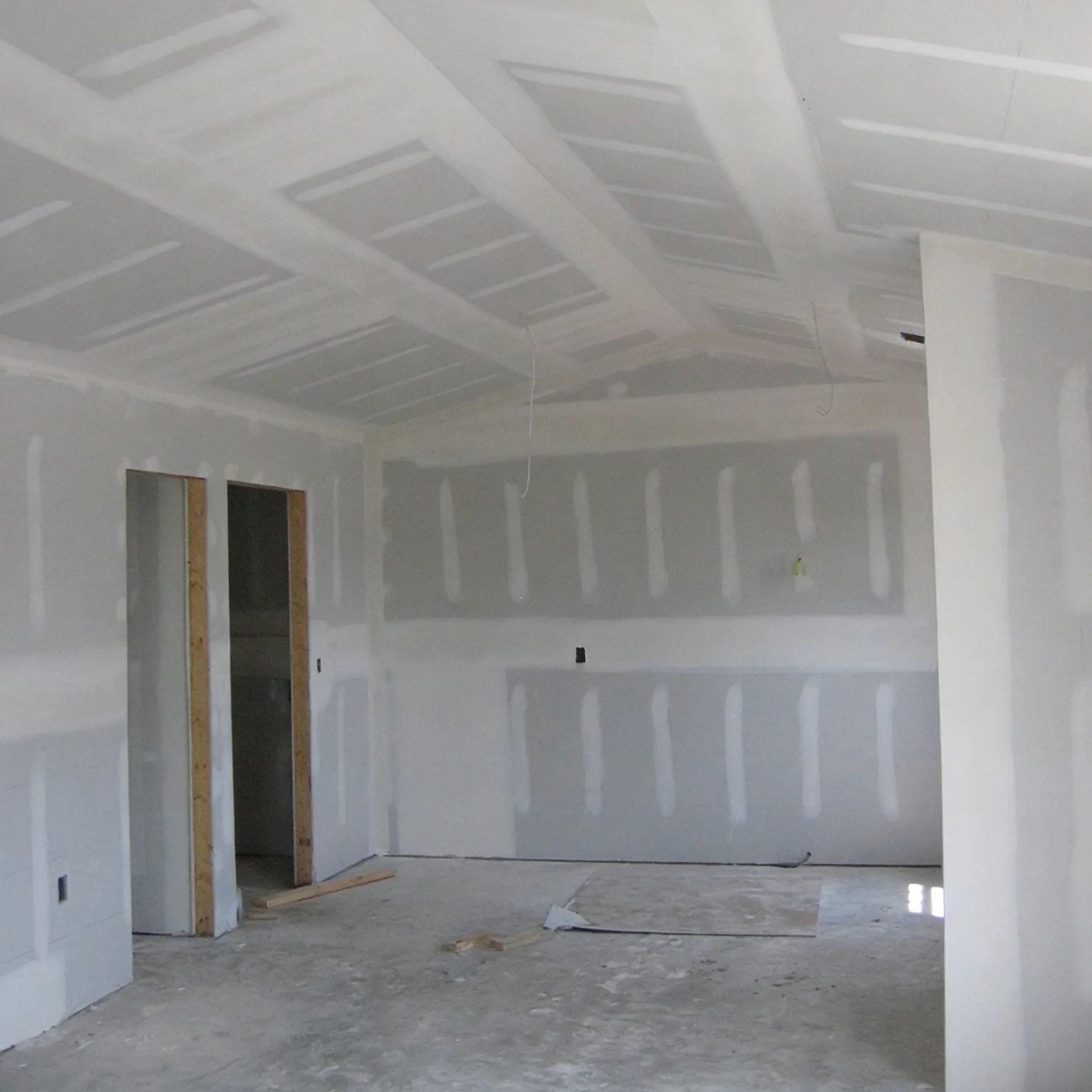
Interior Performance Table
| Advantage | Technical Feature | Practical Outcome |
|---|---|---|
| Light weight | Easier installation | Faster project turnaround |
| Insulation | Gypsum’s air pockets | Better temperature control |
| Fire and sound resistance | Dense gypsum with paper skin | Safer, quieter rooms |
| Custom shaping | Cuttable and moldable | Creative ceiling and wall design options |
In one hotel lobby project, designers used layered plasterboard to shape wave‑like ceilings. The system added no heavy load but completely changed the spatial rhythm.
Is Gypsum Board Used for Interior and Exterior Finish Applications?
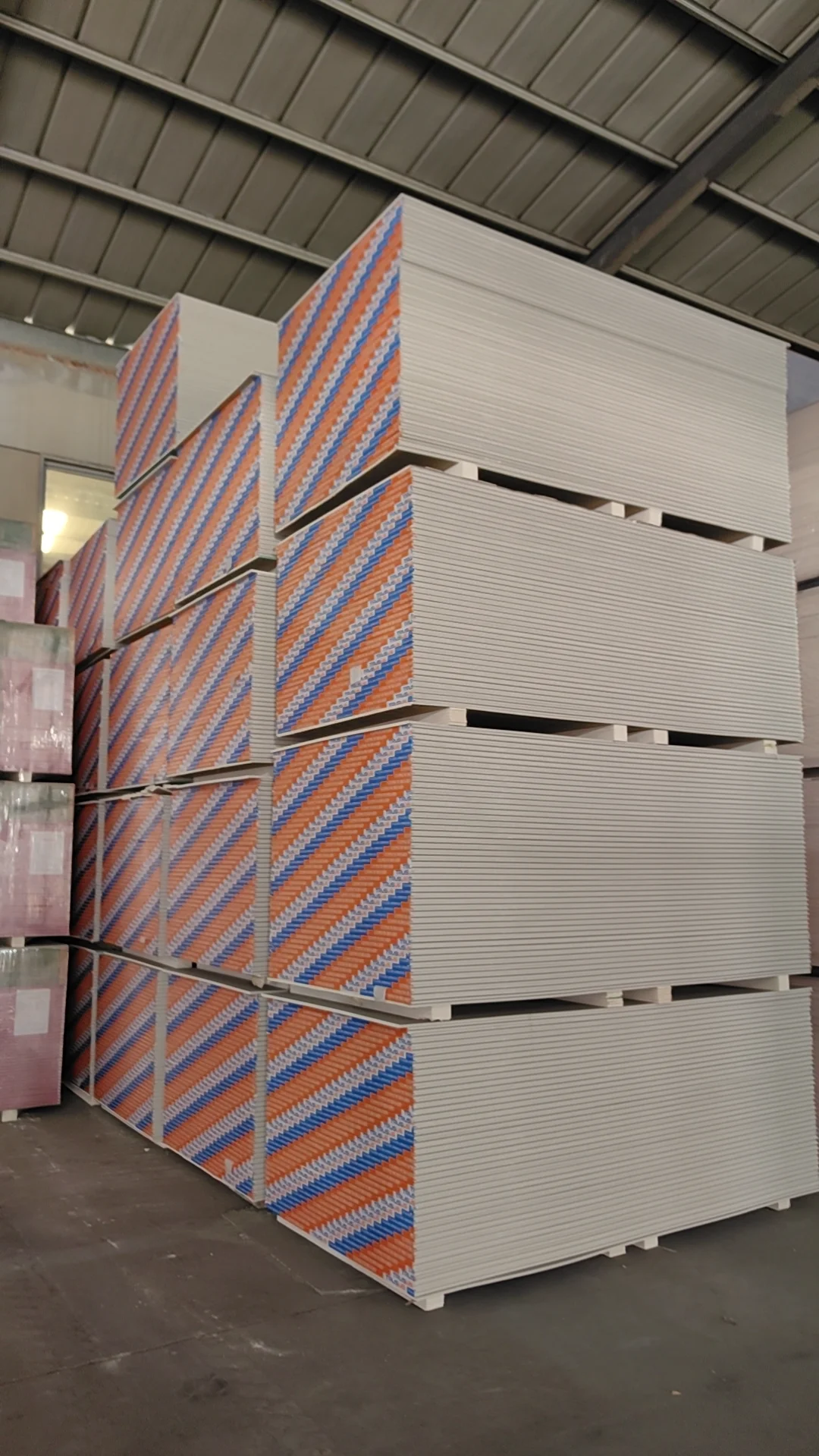
Gypsum board is mainly for interiors but can be adapted for semi‑exterior zones with special coatings. Exterior‑grade boards use additives for moisture and impact resistance.
TRUSUS product insight: interior origin, exterior potential.
Application Matrix
| Environment | Recommended Board Type | Protection Required |
|---|---|---|
| Interior dry rooms | Standard gypsum board | Minimal sealing |
| Bathrooms / kitchens | Moisture‑resistant board | Edge sealing |
| Covered exterior walls | Exterior gypsum board | Anti‑fungal coating |
| Fully exposed façade | Not recommended | Use cement board substitute |
I once collaborated with architects who used treated gypsum panels under shelter canopies. With correct waterproof primers, the boards lasted years, proving their flexibility beyond simple indoor roles.
Conclusion
At TRUSUS, I see gypsum board as more than a construction layer—it’s a creative tool. Used wisely, it defines boundaries, expresses ideas, and reshapes how we feel and live inside spaces.