



A suspended ceiling checklist includes frame layout, hanger alignment, board type selection, fire rating, sound insulation, and access coordination. Each point ensures performance, safety, and maintenance efficiency through the life of the building.
TRUSUS installation insight: precision in setup defines everything above and below.
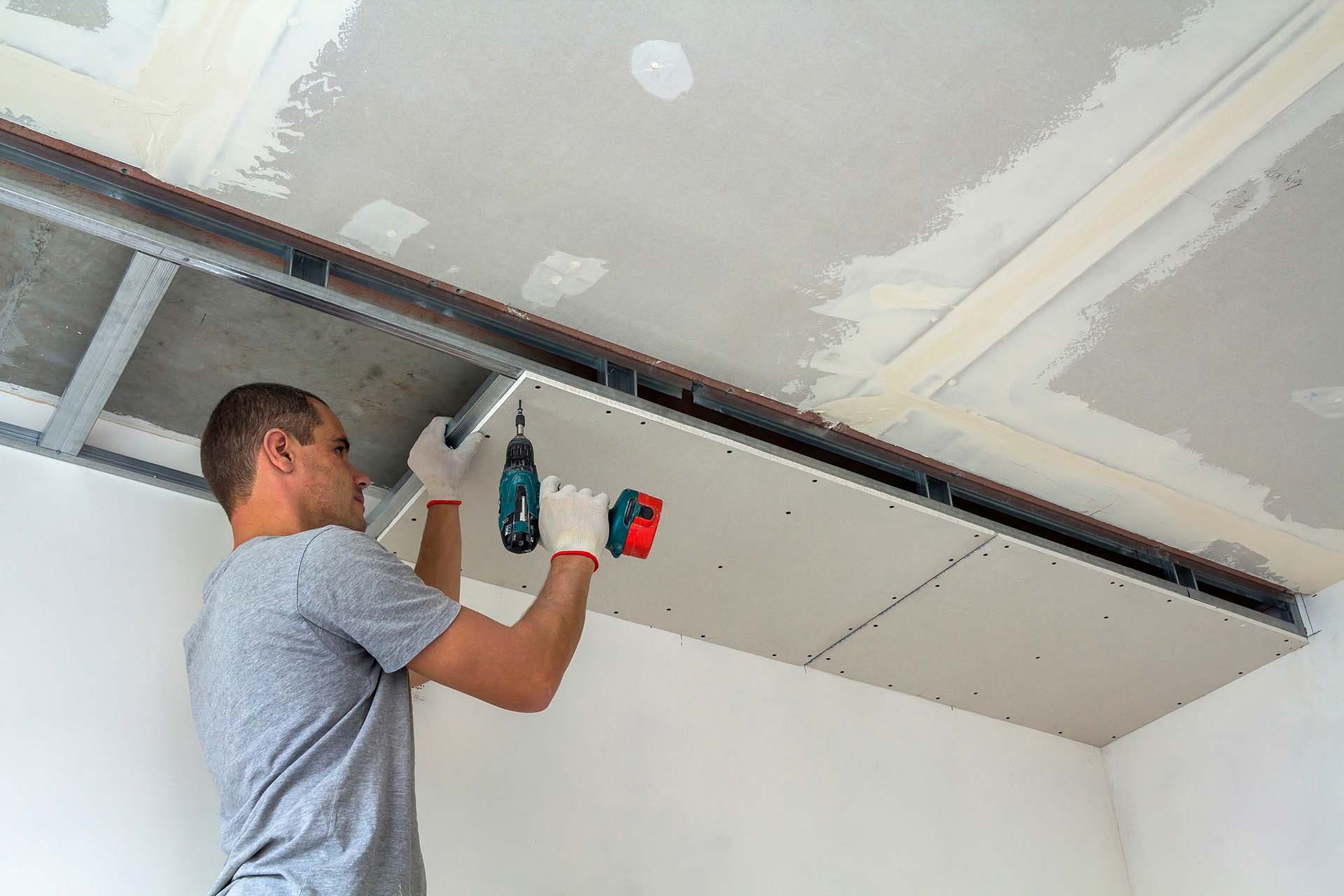
Proper documentation and on-site checks must confirm that all structural and environmental conditions meet design standards before panels are fitted.
What Do You Need for a Suspended Ceiling?
For a suspended ceiling, you need main runners, cross tees, hangers, perimeter trims, ceiling tiles or gypsum boards, and fasteners. Electrical and lighting fixtures may also require integration frames or service openings within the layout.
system insight: every part works as a system, not just as separate pieces.
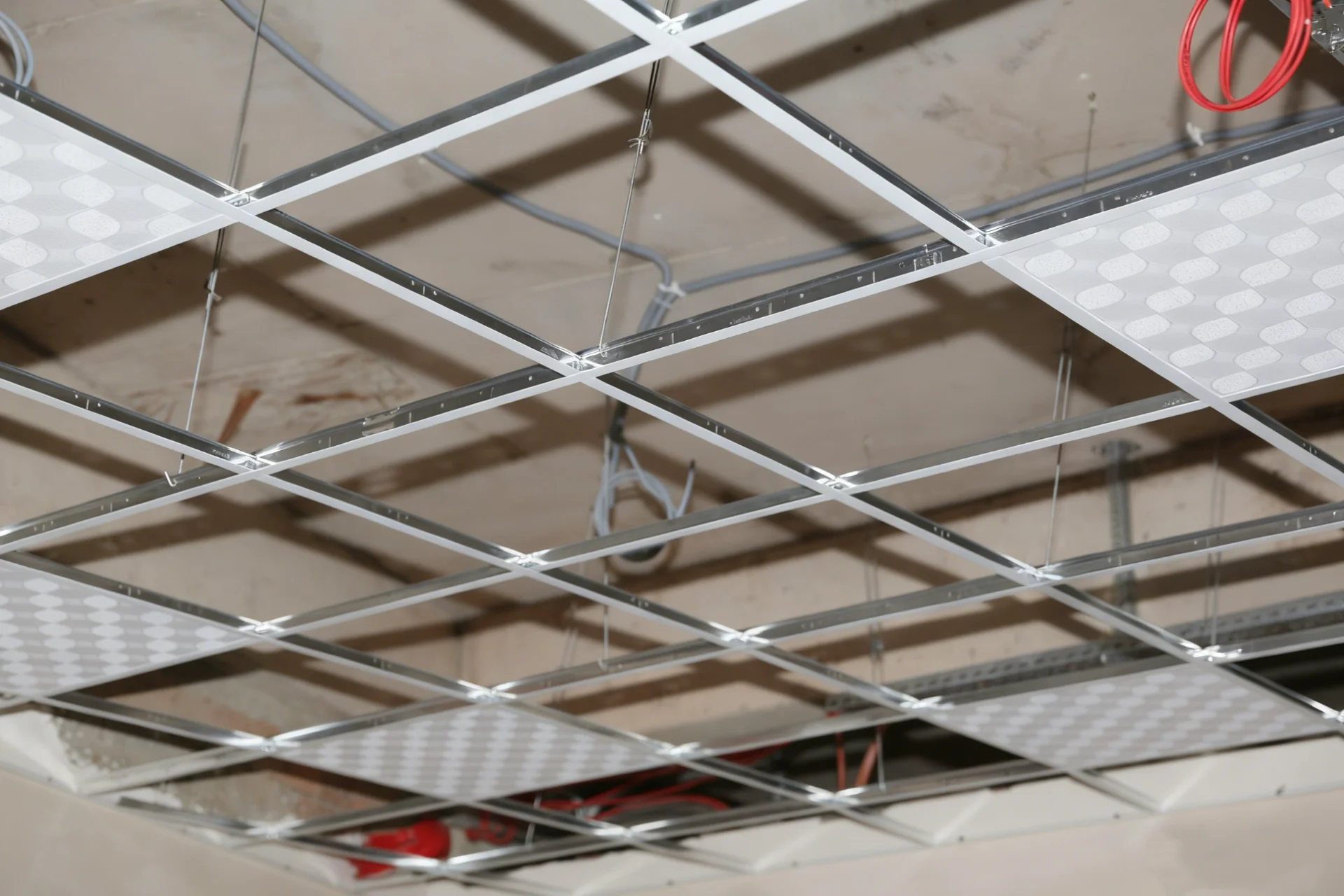
Suspended Ceiling Material Table
| Component | Function | Recommended Material |
|---|---|---|
| Main Runner | Supports load across span | Galvanized steel |
| Cross Tee | Links runners, stabilizes grid | Aluminum or steel |
| Hangers | Transfers weight to structure | Steel wire |
| Perimeter Trim | Defines edge boundary | Extruded aluminum |
| Ceiling Panel | Provides finishing surface | Gypsum or mineral fibre |
| Fasteners | Holds panels securely | Anti-rust screws |
| Insulation Layer | Controls temperature/noise | Mineral wool or acoustic pad |
Each component must align precisely with ceiling design tolerance and ceiling height plan before final installation begins.
What's the First Step When You're Ready to Install a Suspended Ceiling?
The first step is to set the perimeter level. Mark the ceiling height on all walls using a laser level or chalk line. This ensures every hanger and runner aligns accurately during setup, avoiding uneven panels and structural stress.
setup insight: every strong ceiling starts with a straight line.
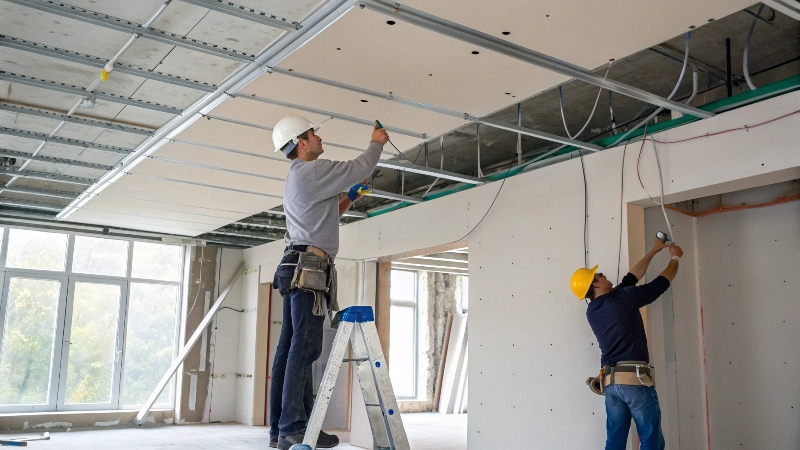
Step-by-Step Start Guide
| Step | Description | Purpose |
|---|---|---|
| 1 | Measure ceiling height | Determine framework reference |
| 2 | Mark perimeter line | Guide position on walls |
| 3 | Install perimeter trim | Anchor grid system |
| 4 | Fix hangers | Carry load evenly |
| 5 | Attach main runners | Primary grid foundation |
| 6 | Connect cross tees | Build sub-grid |
| 7 | Fit ceiling panels | Complete visible layer |
Consistency in the first step sets the accuracy for the entire installation, affecting both aesthetic and functional results.
What Are the Functional Requirements of Suspended Ceiling?
A suspended ceiling must satisfy structural strength, acoustic control, fire resistance, moisture management, and service access. It integrates mechanical systems while maintaining a smooth aesthetic finish that supports lighting and air distribution.
technical insight: a ceiling is not decoration—it is system architecture.
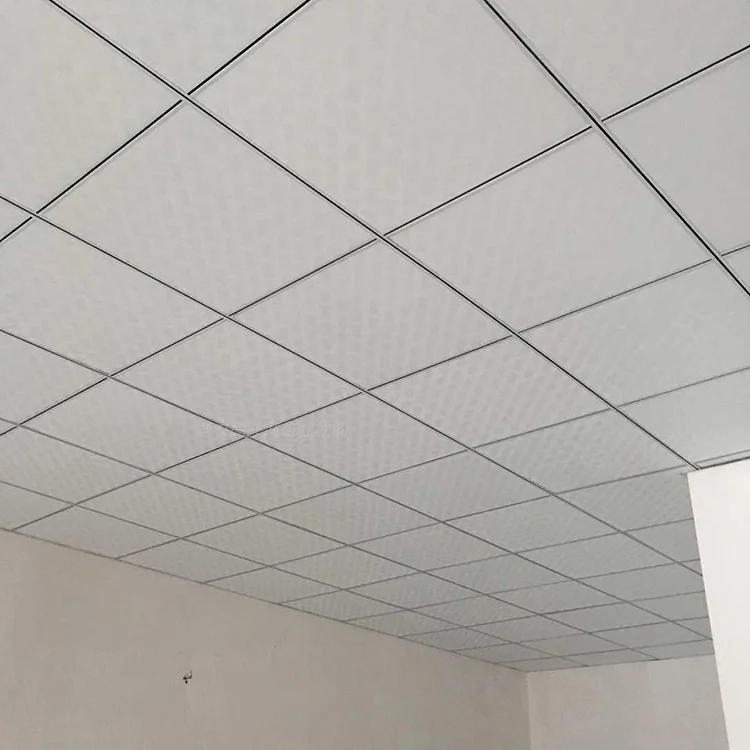
Functional Requirement Table
| Requirement | Description | Benefit |
|---|---|---|
| Structural Strength | Must support own weight and fixtures | Prevents sagging or collapse |
| Acoustic Control | Reduces noise reflection and transmission | Enhances room comfort |
| Fire Resistance | Rated gypsum or mineral boards delay heat spread | Improves building safety |
| Moisture Protection | Controls humidity and prevents mold | Increases material life |
| Service Access | Removable panels and inspection hatches | Allows easy equipment maintenance |
| Visual Finish | Smooth, uniform and clean lines | Improves aesthetics and lighting performance |
A suspended ceiling creates a functional layer moving the building beyond decoration toward an integrated environmental system.
Conclusion
At TRUSUS, I see the suspended ceiling as a bridge between structure and comfort. It anchors technology, manages sound, and protects space integrity. When designed and installed carefully, it transforms the ceiling from an afterthought into an intelligent component of the building’s living system.