



A ceiling grid can get wet, but it should not stay wet. Short-term moisture exposure may not cause failure, but prolonged dampness will corrode metal components, loosen fasteners, and stain attached ceiling tiles.
TRUSUS ceiling insight: water isn’t the enemy—stagnant moisture is.

Proper ventilation, vapor barriers, and anti-rust coatings help ceiling grids survive in humid conditions or near HVAC systems.
What Are the Early Signs of Water Damage on Gypsum Ceiling Tile?
Early signs of water damage include discoloration, sagging edges, bubbling paint, or joint swelling. These changes suggest that moisture has penetrated the surface layer or accumulated within the board’s core.
diagnostic insight: every stain tells a story—listen before it spreads.
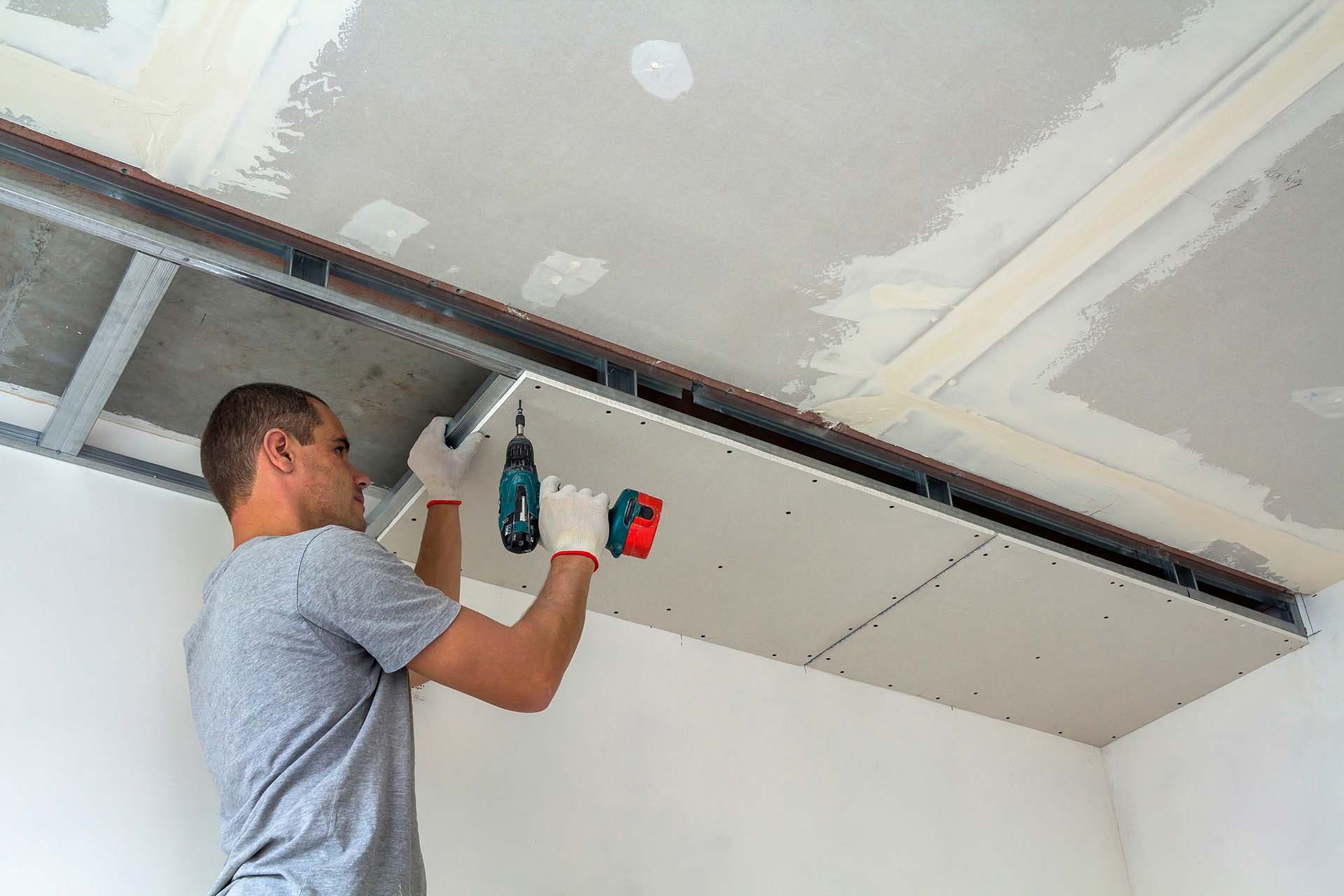
Water Damage Indicators
| Symptom | Likely Cause | Immediate Action |
|---|---|---|
| Yellow or brown spots | Leaking pipes or condensation | Inspect above ceiling |
| Soft or spongy texture | Prolonged absorption | Replace affected panels |
| Downward bowing | Hidden water pooling | Check grid and support |
| Mold smell or specks | Poor air circulation | Dry thoroughly, add ventilation |
| Joint edge swelling | Capillary moisture | Seal and repaint after drying |
Detecting early warning signs prevents deeper structural problems and costly replacement later.
What Causes Discoloration on a Gypsum Ceiling?
Discoloration usually results from moisture intrusion mixed with airborne dust, rust, or microbial growth. It often begins near HVAC vents, light fixtures, or corners where condensation collects. Chemical reactions between gypsum and water impurities can also leave visible stains.
material insight: when color changes, chemistry is speaking.
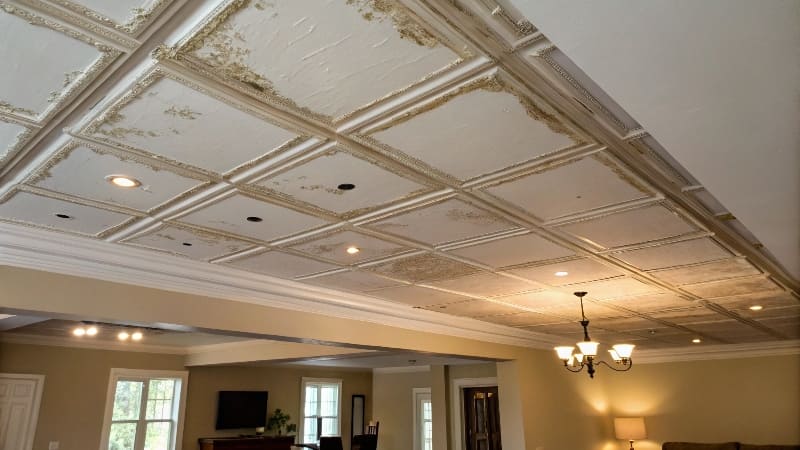
Discoloration Triggers
| Source | Mechanism | Preventive Step |
|---|---|---|
| Condensation | Water vapor meets cold surface | Improve insulation and airflow |
| Rust Drip | Corrosion of ceiling grid | Apply anti-rust primer |
| Dust Mixing | Humid air binds dust to surface | Increase filtration |
| Microbial Growth | High humidity + organic residue | Use anti-fungal coating |
| Paint Reaction | VOC interaction under heat | Use moisture-tolerant paint |
Addressing discoloration requires examining both the environmental and structural systems behind the ceiling.
What Causes Water Spots on the Gypsum Ceiling?
Water spots appear due to leaks from pipes, roof membranes, or condensation along HVAC ducts. The gypsum core draws in water, which then evaporates unevenly, leaving mineral traces that mark the surface.
TRUSUS systems insight: water spots are not defects—they’re messages from your building’s microclimate.
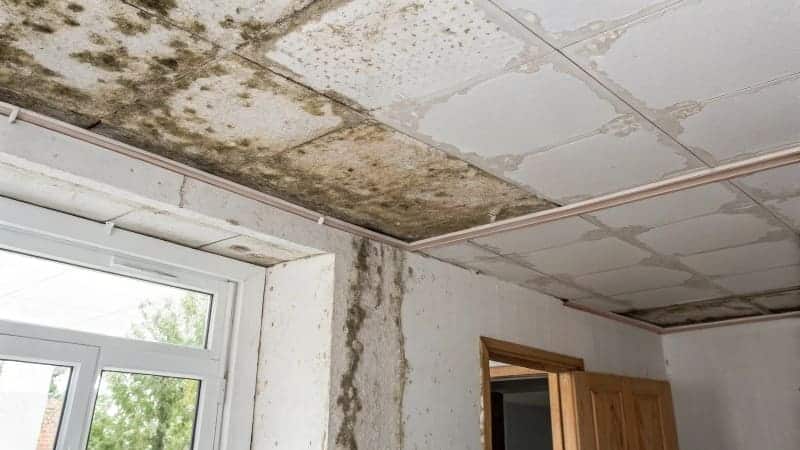
TRUSUS Water Spot Pattern Guide
| Spot Pattern | Meaning | Recommended Response |
|---|---|---|
| Circular stains | Slow drip or condensation | Check pipes or ducts above |
| Linear trails | Running leak from joint | Inspect sealing and junctions |
| Irregular blotches | Broad humidity exposure | Evaluate whole ceiling area |
| Reappearing mark | Persistent leak source | Conduct pressure test on piping |
| Accompanied by sagging | Heavy water load | Replace board and dry framing |
Identifying the pattern of water spots provides clues to the precise origin of the leak and supports preventive repairs.
Conclusion
At TRUSUS, I see gypsum ceilings not as fragile covers, but as communicative systems that respond to their environment. Each spot, stain, or warp signals how the building breathes. Real protection comes from designing ceilings that sense, adapt, and restore balance between material, moisture, and air.