



Noise complaints are destroying tenant retention rates in Georgetown right now. If your office is too loud, clients leave. If your apartment has thin walls, renters move out. You are losing money.
The most effective solution for noise control is upgrading to acoustic mineral fiber ceilings and insulated drywall partitions. Using high-quality gypsum board and rockwool insulation significantly reduces sound reflection and transmission, creating the quiet environment essential for call centers and luxury residential projects.
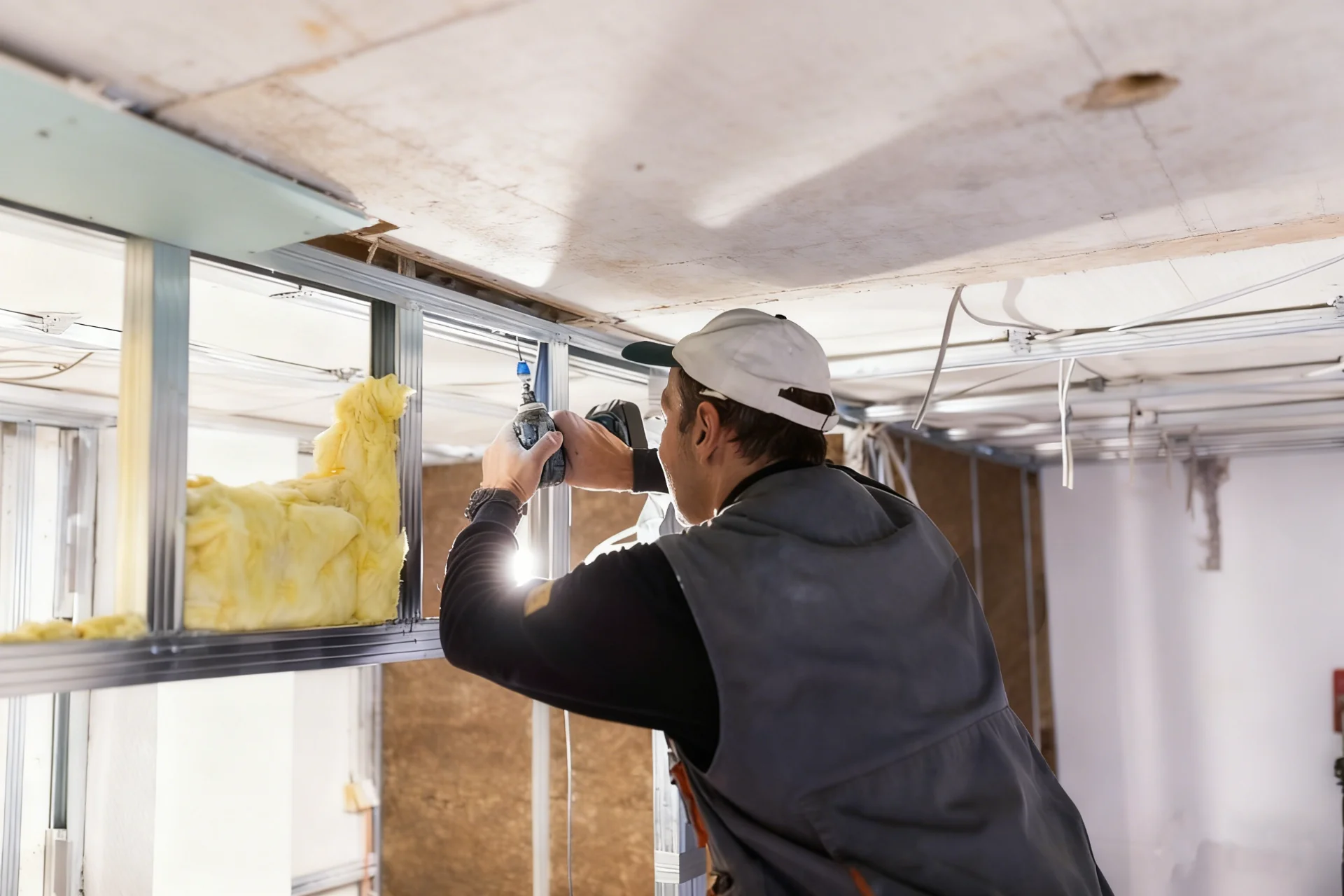
Transition Paragraph: I remember visiting a new call center on the East Bank last year. It looked very modern with glass and tile everywhere. But when the agents started talking, the echo was terrible. They could not hear their customers on the phone. The owner had to close the office for two weeks to fix the ceiling. This is a common mistake. You must plan for sound before you build. Let us look at the specific materials that fix this problem.
Why Are Mineral Fiber Ceilings Better Than PVC for Sound Control?
Your staff cannot focus because every phone call echoes around the room. Hard plastic ceilings reflect noise like a mirror reflects light. Productivity drops, and frustration rises daily.
Acoustic mineral fiber boards differ from PVC because they are porous and absorb sound. This reduces the "echo chamber" effect. It makes speech clearer and lowers overall noise levels in open-plan offices like BPOs and banks where drywall partitions are common.

Dive deeper Paragraph: When you design a commercial space, you must understand how sound waves behave. Hard surfaces like concrete floors and PVC ceiling tiles bounce sound back into the room. This creates a noisy environment where speech is hard to understand. We call this "Reverberation." Mineral Fiber tiles are made from wet-felted fibers and rockwool. They have thousands of tiny holes on the surface. When sound hits the tile, it enters these holes and gets trapped. This is the acoustic advantage. We measure this with the NRC rating. PVC tiles usually reflect 95% of sound. Our mineral fiber tiles absorb more than half of it. For a BPO call center, I always recommend the "Fissured" pattern. This texture increases the surface area to trap more noise. These boards also look more corporate than glossy plastic. They help your plasterboard walls look better by providing a clean finish.
| Feature | PVC Ceiling Tile | TRUSUS Acoustic Mineral Fiber |
|---|---|---|
| Material | Gypsum with PVC Face | Wet-Felted Mineral Wool |
| Main Function | Easy Cleaning | Sound Absorption |
| NRC Rating | Very Low (<0.10) | High (0.55 - 0.60) |
| Best Use | Kitchens / Bathrooms | Offices / Call Centers |
| Fire Safety | Can melt | Non-Combustible |
How Do You Stop Sound from Traveling Through Hollow Drywall Partitions?
You built walls to separate rooms, but you can still hear everything next door. A hollow wall acts like a drum, amplifying vibrations instead of stopping them.
To stop sound transfer, you must fill the drywall stud cavity with rockwool or glass wool insulation. Using a heavy plasterboard or gypsum board on wider metal studs creates a barrier that breaks the sound path between rooms.

Dive deeper Paragraph: Many contractors in Guyana leave the wall hollow to save money. This is a huge mistake for privacy. A hollow wall allows sound to pass through easily. It acts like a drum skin. When someone speaks on one side, the air inside vibrates. It carries the sound to the other side. You need to break this path with mass and insulation. I suggest using a 70mm or 75mm steel stud instead of 50mm. This creates a bigger air gap. Then, you must fill that gap. We supply high-density rockwool and glass wool rolls for this purpose. These materials are dense and fibrous. When sound waves try to pass through, the friction against the fibers turns the sound into a tiny amount of heat. The sound dies inside the wall. We rate this performance using the STC scale. A hollow plasterboard wall has an STC of 35. You can hear every word next door. An insulated drywall system can reach STC 45 or higher. This makes the room feel solid and private.
| Component | Standard Hollow Wall | TRUSUS Acoustic Wall |
|---|---|---|
| Board Type | Standard Gypsum Board | Heavy Plasterboard |
| Cavity Fill | Empty (Air) | Rockwool / Glass Wool |
| Stud Size | 50mm Metal Stud | 70mm Metal Stud |
| Result | Noisy / Cheap Feel | Private / Professional |
Is Adding More Gypsum Board the Secret to Total Silence?
Sometimes insulation is not enough for luxury standards. High-paying tenants demand absolute privacy. If they hear their neighbor’s TV through the plasterboard, they will demand a rent reduction immediately.
For maximum privacy, install double layers of gypsum board on both sides of the wall. This extra mass blocks low-frequency noise that single-layer drywall misses, making it the standard for 5-star hotels and executive boardrooms.
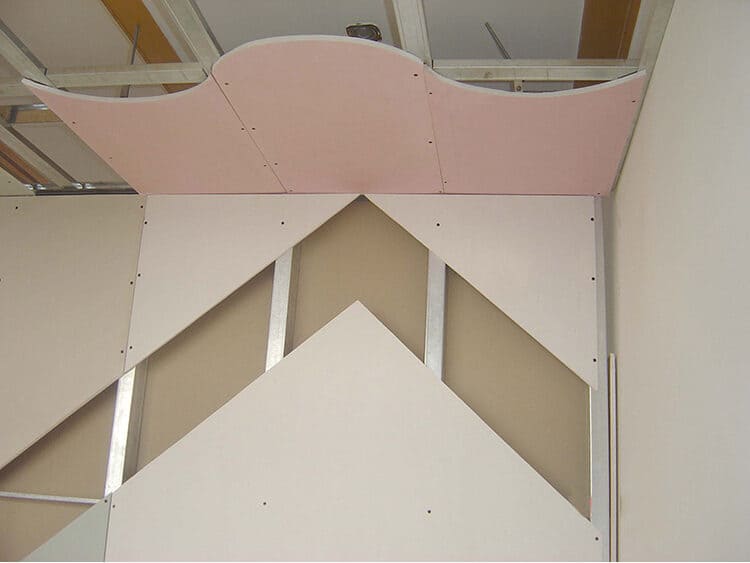
Dive deeper Paragraph: In engineering, there is a simple rule: Mass stops sound. Heavy things are hard to vibrate. A single sheet of plasterboard is relatively light. A loud bass sound from a TV can push it. When you screw a second sheet of gypsum board on top of the first one, you double the mass. This makes the wall much harder for sound waves to move. We call this the double-layer technique. You must stagger the joints so the seams do not line up. If the cracks line up, sound will leak through. Using a 5/8" (15.9mm) drywall sheet is even better than the standard 1/2" size. It is denser and often has glass fibers in the core. This is usually sold as "Fire Rated" board, but it is excellent for acoustic control too. If you are building a high-end apartment in Georgetown, your tenant pays a lot of rent. They expect silence. Adding that second layer of plasterboard is the best way to ensure they stay happy. It turns a simple partition into a solid barrier.
| Construction Method | Mass per Sq Meter | Privacy Level |
|---|---|---|
| Single Layer 1/2" Drywall | ~8 kg/m2 | Low |
| Single Layer 5/8" Gypsum | ~10 kg/m2 | Medium |
| Double Layer 5/8" Plasterboard | ~20 kg/m2 | Very High |
Conclusion: Soundproofing is an investment, not an expense. Use acoustic mineral fiber, drywall with rockwool, and double-layer gypsum board to protect your rental income and business reputation.