



Fire-resistant gypsum resists fire because its core material, calcium sulfate dihydrate (CaSO₄·2H₂O), releases chemically bound water as steam when exposed to heat. This endothermic reaction absorbs heat energy, delaying temperature rise, creating a vapor shield that slows flame penetration and protects structural integrity through reinforced glass fiber within the gypsum matrix.
Calcium sulfate dihydrate contains chemically bound water, which vaporizes under heat exposure to absorb thermal energy. This process creates a steam barrier that retards heat transmission through the gypsum core. Glass fiber reinforcements improve structural integrity under high temperatures, preventing collapse. Additives enhance long-term performance during fire exposure.
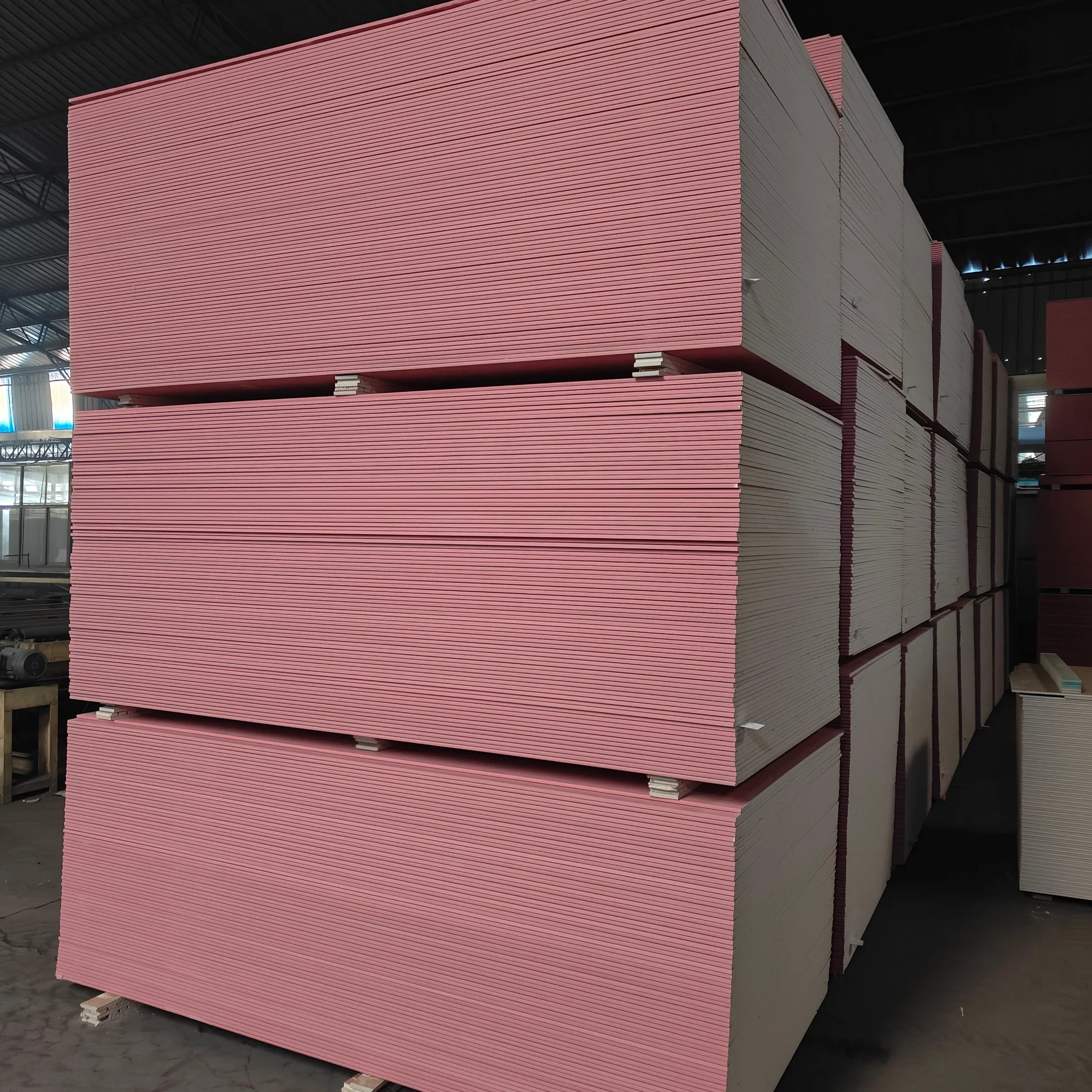
From my manufacturing experience, the ability of gypsum to maintain strength while managing internal chemical reactions under heat is the foundation of modern fire safety design.
Is 9.5 mm Plasterboard Fire Rated?
Standard 9.5 mm plasterboard is not fire rated; it serves general interior use with basic flame resistance. Fire-rated boards start from 12.5 mm or thicker, containing special glass fiber reinforcement and additives to withstand heat. TRUSUS 12.5–15 mm boards achieve one-hour ratings when installed as per tested wall assemblies.
9.5 mm plasterboard lacks reinforcement and heat-resistant compound necessary for certified fire ratings. Thicker gypsum boards of 12.5 mm or more provide tested fire protection. Reinforced cores maintain structural integrity under heat exposure. System installation defines duration, not individual board thickness.
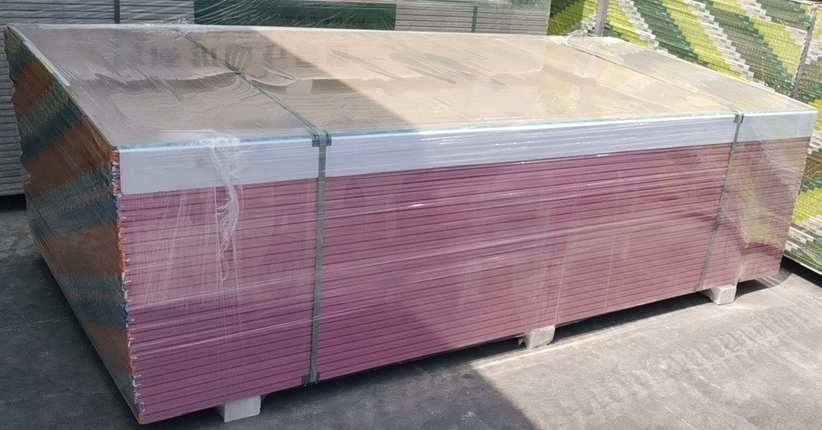
Board Fire Rating Specifications
Comparison of common plasterboard thickness and their fire rating values.
| Board Type | Thickness | Core Composition | Fire Rating (Single Layer) | System Potential | Recommended Use |
|---|---|---|---|---|---|
| Standard | 9.5 mm | Regular gypsum | Non-rated (<30 min) | Upgradable | Internal partitions |
| Fire-Rated | 12.5 mm | Reinforced gypsum | 60 min | 90–120 min system | Residential |
| Heavy-Duty | 15 mm | Glass fiber core | 90 min | 180 min system | Commercial |
| Premium TRUSUS | 15 mm+ | Advanced additives | 120 min | Over 180 min | High-risk facilities |
Thickness and core composition jointly determine effective fire performance.
System Integrity Factors
Factors influencing fire resistance performance.
| Factor | Description | Role | Example Outcome |
|---|---|---|---|
| Board Thickness | Determines heat latency | Slows penetration | Longer barrier |
| Core Additives | Reinforces at high temperature | Prevents collapse | Maintains shape |
| Fastening Details | Controls expansion | Reduces failure | Enhanced stability |
| Sealants | Prevents flame intrusion | Preserves cavity | Longer safety |
| System Testing | Certifies performance | Guarantees compliance | Fire-rated assembly |
System-based approach required for true fire resistance.
Do 2 Layers of Plasterboard Fire Rating?
Two layers of fire-rated plasterboard on each side of a wall assembly can achieve ratings up to two hours when installed correctly with metal studs, joint sealing, and insulation. Each layer adds time protection by increasing thermal mass, vapor release, and structural redundancy under sustained heat exposure.
Two-layer assemblies provide double thermal protection, reducing overall heat penetration rate. Layered gypsum cores release moisture sequentially, sustaining insulation longer. Correct sealing and stud configuration necessary for certified fire performance. System testing defines actual time rating.
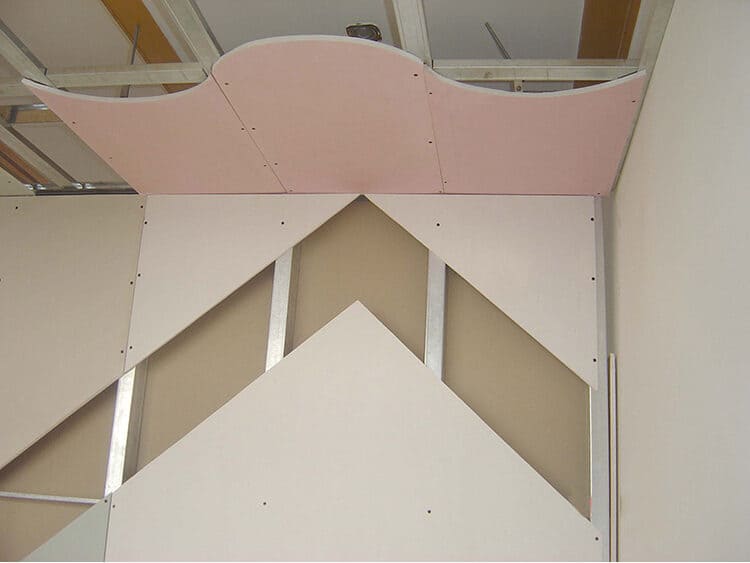
Multi-Layer Wall System Ratings
Calculated ratings based on board and system configuration.
| Layers per Side | Board Type | Approx. Rating | Tested System Performance | Typical Application |
|---|---|---|---|---|
| 1 layer | Regular gypsum | Up to 30 min | Minimal | General partition |
| 1 layer fire-rated | Reinforced gypsum | 60 min | Certified wall | Residential firewall |
| 2 layers fire-rated | Reinforced gypsum | 120 min | System tested | Commercial firewall |
| 3 layers high-performance | Premium TRUSUS | 180 min+ | Specialized barrier | Data centers, hospitals |
Layer configuration extends protection duration exponentially.
Heat Transfer Dynamics in Multi-Layer Assemblies
Physical behavior under fire exposure.
| Layer | Temperature Zone | Reaction Process | Function | Safety Effect |
|---|---|---|---|---|
| Outer Layer | Direct contact | Water release | Initial defense | Heat absorption |
| Middle Layer | Moderate | Controlled expansion | Continuity support | Delay transfer |
| Inner Layer | Minimal heat | Structural protection | Maintains wall form | Prevent collapse |
Sequential activation creates multi-stage fire defense barrier.
What Is a 2 Hour Fire Rating for Drywall?
A 2-hour fire rating means the wall assembly can prevent fire penetration, maintain structural integrity, and limit temperature rise for at least two hours under standard fire testing. It requires multiple fire-rated gypsum layers, sealed joints, proper stud framing, insulation, and tested installation methodology ensuring compliance with ASTM E119 or equivalent standards.
Two-hour rating defines duration of wall resistance during fire exposure. Assembly maintains structure, prevents penetration, and limits heat transmission for two hours. Achieved through multiple layers, sealants, and tested wall systems. Performance verified via standard tests like ASTM E119.
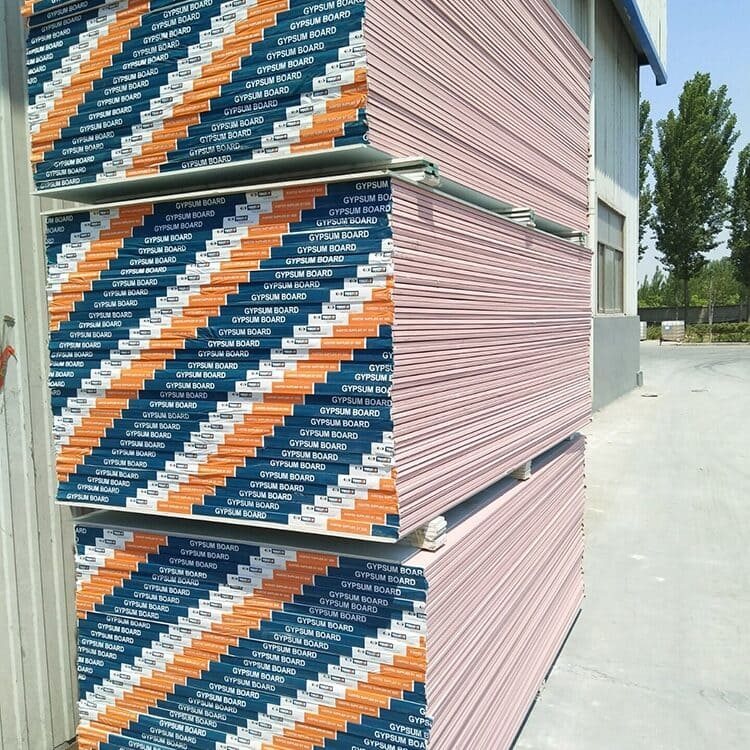
System integration achieves certified two-hour fire resistance.
Fire Rating Comparison Table
Approximate wall system performance data by configuration type.
| System Configuration | Total Board Layers | Rating Duration | Typical Usage | Safety Category |
|---|---|---|---|---|
| Single-board wall | 2 | 30–60 min | Residential | Basic |
| Double-board firewall | 4 | 90–120 min | Commercial | Enhanced |
| Insulated firewall | 4 + fill | 150–180 min | Institutional | Advanced |
| Premium TRUSUS system | 6 | 180–240 min | Critical facilities | High |
Wall assembly quality defines actual fire rating duration.
Testing Standards Reference
Industry standards governing fire ratings.
| Standard | Test Description | Duration Measure | Compliance Scope | Application |
|---|---|---|---|---|
| ASTM E119 | Fire endurance test | Time until failure | Construction materials | Global |
| UL 263 | Building assemblies fire test | Temperature & integrity | U.S. certification | Commercial |
| BS 476 Part 22 | Fire resistance duration | Structural stability | U.K. system | International |
| ISO 834 | Fire-resistance test | Global benchmark | Multinational | Industrial use |
| GB/T 9978 | Chinese test standard | Thermal & smoke analysis | Regional compliance | Domestic |
Proper certification validates real-world fire rating claims.
Conclusion
Fire-resistant gypsum resists flame through chemical water release, heat absorption, and structural integrity reinforcement with glass fiber. Standard 9.5 mm plasterboard is not fire rated; 12.5–15 mm boards achieve higher protection when combined into systems. Two layers of fire-rated gypsum provide up to two hours resistance, while a two-hour fire rating means tested wall assemblies can withstand fire for 120 minutes under standard conditions, preserving structure, slowing heat transmission, and protecting life and property within certified system design.