



Baked-paint T-grids are coated with a hardened paint finish that gives them a glossy, decorative surface, while galvanized T-grids use a zinc coating that protects against corrosion and rust. The difference lies in application control—paint for aesthetics, zinc for durability.
TRUSUS insight: surface beauty lasts years; internal protection lasts decades.

Baked-paint T-grids are perfect for clean, dry indoor spaces, while galvanized grids are ideal for humid or coastal environments that demand corrosion resistance.
Is Galvanized Better Than Paint?
Galvanized coating is better for corrosion protection because zinc reacts with oxygen and moisture to create a self-protective barrier, preventing rust from spreading. Baked paint offers smoother surface aesthetics but less total protection against long-term humidity exposure.
protection insight: zinc works chemically; paint works visually.
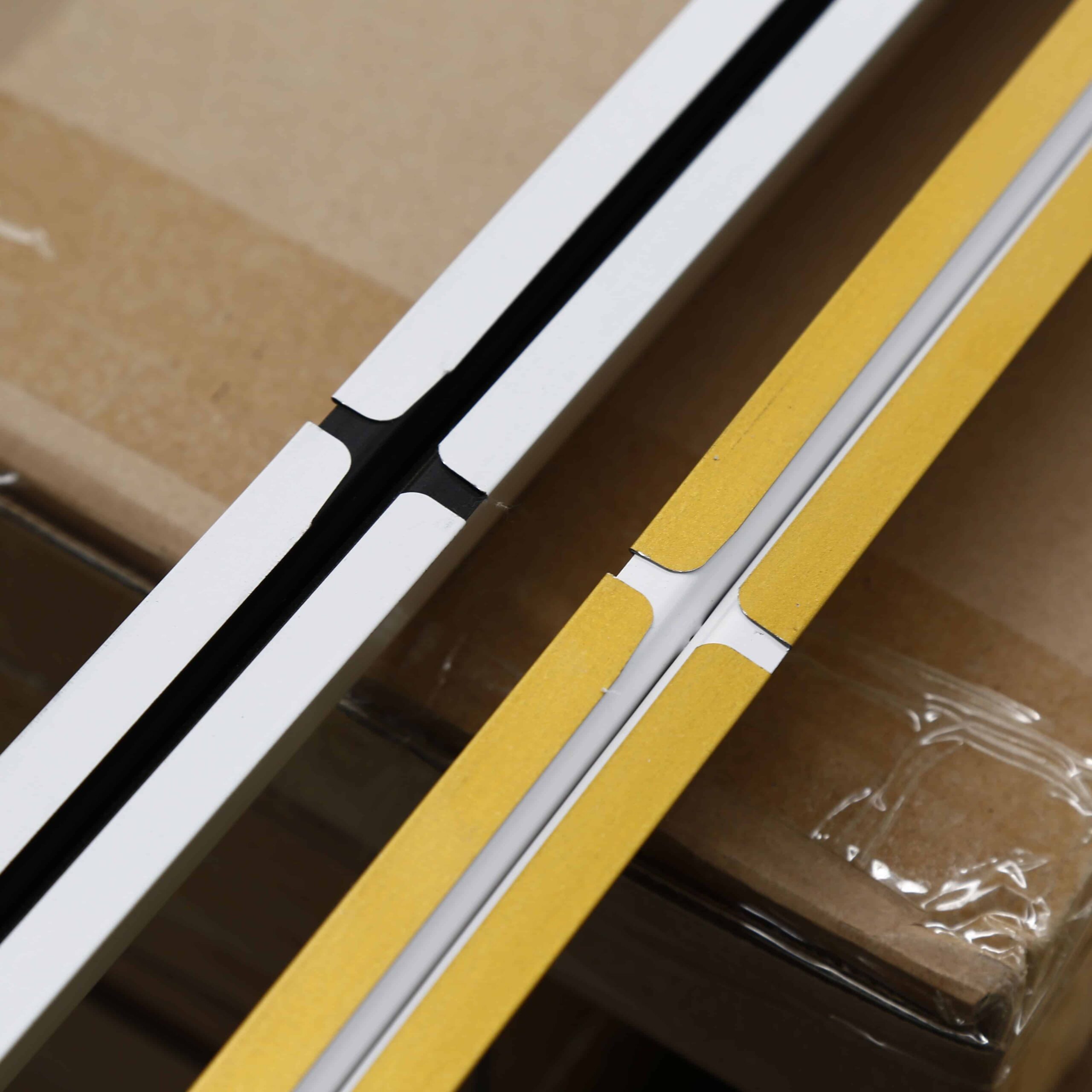
Coating Comparison
| Coating Type | Strength | Primary Protection | Typical Use |
|---|---|---|---|
| Baked Paint | Moderate | Surface finish | Offices, clean rooms |
| Galvanized Zinc | High | Anti-corrosion layer | Warehouses, coastal zones |
| Combined (paint + zinc) | Very High | Dual protection | Commercial complex interiors |
Practical Application
| Environment | Recommended Type | Reason |
|---|---|---|
| Humid basement | Galvanized | Long corrosion resistance |
| Hospital ceiling | Baked paint | Reflectivity and cleanliness |
| Seaside hotel | Combined coating | Dual layer, aesthetic and durable |
Each finish supports its context; the correct choice makes the whole ceiling system last longer.
What Are the Advantages of Galvanizing Over Painting?
Galvanizing lasts much longer because zinc coating bonds metallurgically with steel, creating a protective layer that resists moisture and physical damage. Unlike paint, galvanizing can prevent rust even when the surface is scratched.
TRUSUS durability insight: true defense is not surface deep—it reacts and heals.

Galvanizing Advantage Table
| Property | Galvanizing | Painting |
|---|---|---|
| Corrosion Resistance | Excellent | Good in dry zones |
| Adhesion Strength | Metallurgical bond | Surface bond only |
| Maintenance Need | Very Low | Needs periodic repaint |
| Life Span | 20–50 years | 5–15 years |
Why Zinc Outperforms Paint
| Mechanism | Description |
|---|---|
| Self-sacrificing reaction | Zinc corrodes first, protecting steel underneath |
| Layer integrity | Resistant to impact and thermal expansion |
| Surface stability | No flaking or bubbling under moisture |
| Life-cycle value | Reduced maintenance and replacement costs |
Combining paint and galvanizing can yield both beautiful and enduring finishes, making the grid system reliable under stress and time.
How Do You Calculate a Ceiling Grid?
To calculate a ceiling grid, divide the ceiling area by the panel module (usually 600×600 mm), then account for main runners, cross tees, and perimeter trims. You must also calculate extra sections for fixtures and maintenance access.
TRUSUS design insight: ceiling calculation is about accuracy, not just counting pieces.
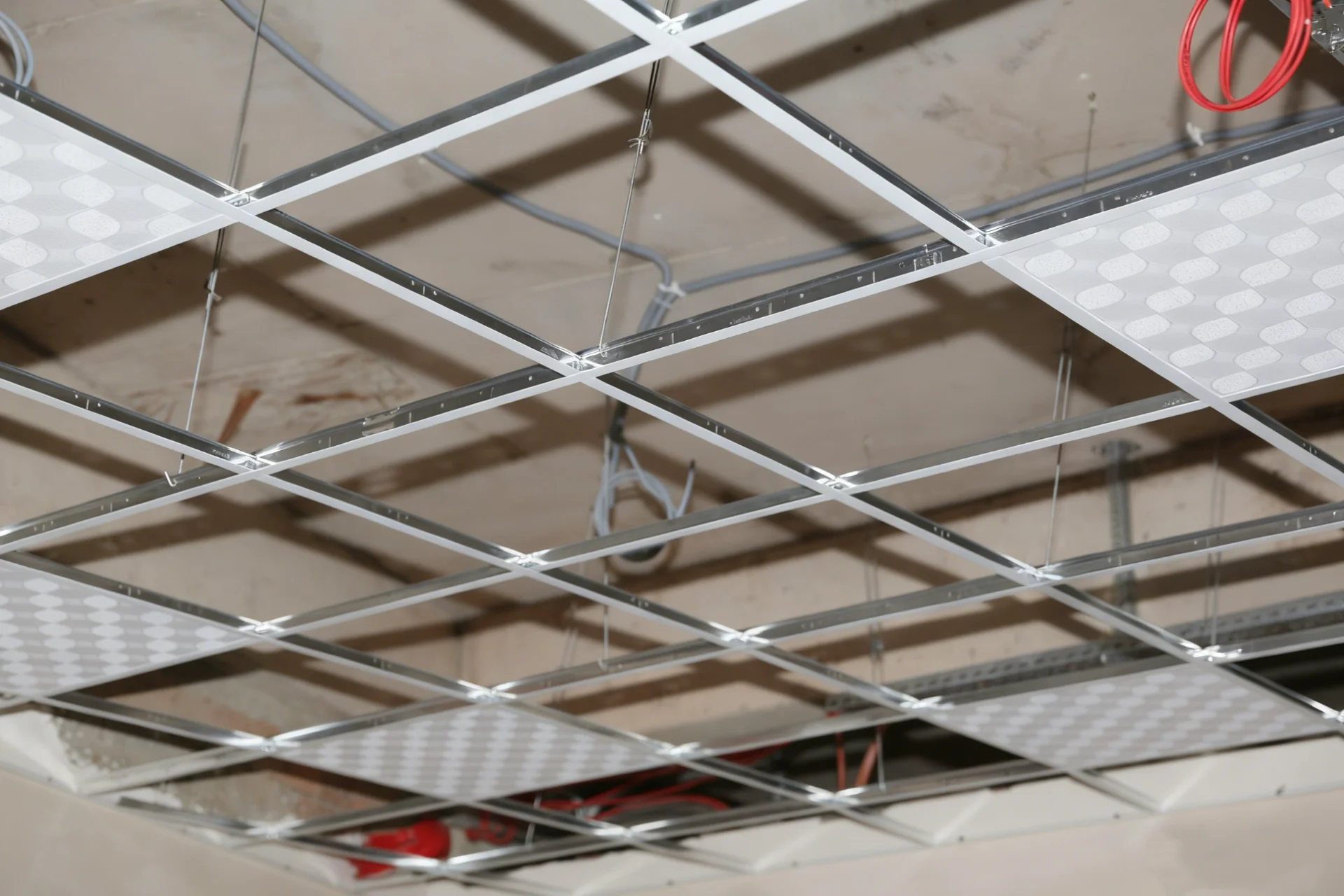
Ceiling Grid Calculation Table
| Step | Action | Example (Ceiling: 6m × 4m) |
|---|---|---|
| 1 | Divide ceiling area by module size | (6×4)/(0.6×0.6)=66 panels |
| 2 | Calculate main tees (every 1.2m) | 6m/1.2=5 main tees |
| 3 | Calculate cross tees (per 600mm spacing) | 4m/0.6=7 cross tees per section |
| 4 | Add perimeter tiles | 15–20% extra for edge fits |
Layout Control for Long-Term Stability
| Parameter | Description |
|---|---|
| Module tolerance | ±2 mm to match panel design |
| Hanging distance | Uniform per load calculation |
| Anchor point strength | Tested based on ceiling weight |
| Environmental exposure | Adjust grid coating for humidity level |
Calculating a ceiling grid properly ensures balance and alignment, the core of ceiling longevity and visual perfection.
Conclusion
Baked-paint offers refined beauty; galvanized coating offers lifetime durability. Both serve different needs but excel when used together. In TRUSUS belief, ceiling systems succeed not from a single finish—but from coordinated protection, precise calculation, and enduring trust in material integrity.