



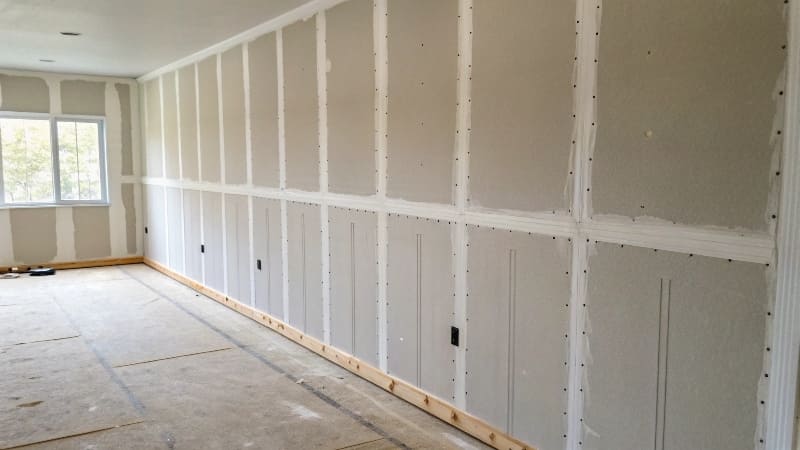
The typical deflection limit for gypsum board is L/240 to L/360, depending on whether it’s used for walls or ceilings. “L” represents the span between support points.
TRUSUS insight: deflection defines how a board behaves as a structure, not just how it decorates.

This small numerical limit ensures the board stays flat, joints don’t crack, and finishes remain stable. It turns drywall from a surface material into an engineering component.
What Is the Deflection Criteria for Gypsum Board?
Deflection criteria ensure gypsum board doesn’t bend excessively under load or vibration. For ceilings, the limit is typically L/360; for walls, L/240. These ratios control visual and structural durability.
technical insight: understanding deflection is understanding architectural lifespan.
Deflection Standards
| Application Type | Limit Ratio | Purpose | Risk if Exceeded |
|---|---|---|---|
| Wall Systems | L/240 | Prevent cracks at joints | Visible distortion and fissures |
| Ceiling Systems | L/360 | Prevent sag or ceiling drop | Sagging, rupture under weight |
| Partition Panels | L/240 | Protect seams and coating | Reduced stability |
Structural Considerations
| Factor | Effect | Design Control |
|---|---|---|
| Span Length | Determines allowed bending | Minimize distance between supports |
| Board Thickness | Increases stiffness | Use thicker panels for wide spans |
| Frame Spacing | Affects joint stability | Follow manufacturer’s guidance |
Deflection criteria connect material data with wall system integrity—small tolerance, big result.
What Rating Is 12.5 mm Fireboard?
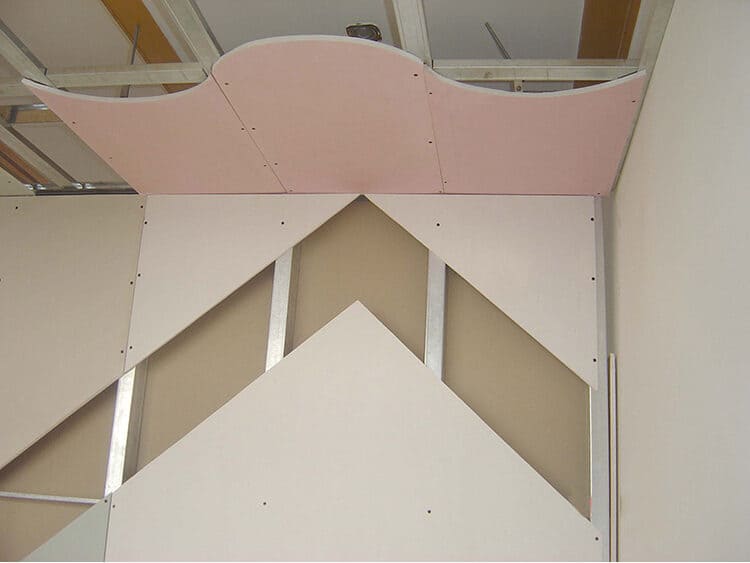
A 12.5 mm Fireboard typically provides 30 to 60 minutes of fire resistance depending on installation, backing, and stud system. It contains gypsum reinforced with glass fibers and additives for heat control.
safety insight: fire rating is about time and stability, not just resistance.
Fireboard Performance Table
| Thickness | Typical Fire Rating | Reinforcement | Recommended Use |
|---|---|---|---|
| 12.5 mm | 30–60 minutes | Fiber + additive | Residential and commercial walls |
| 15 mm | Up to 90 minutes | Enhanced density | Public buildings or stairwells |
| 18 mm | 120 minutes | High-performance | Industrial or safety-critical zones |
Factors Influencing Rating
| Element | Effect | Design Note |
|---|---|---|
| Stud Type | Affects fire endurance | Use steel framing for high ratings |
| Joint Treatment | Stops fire spread | Apply fire-rated compound |
| Backing Layer | Adds thermal resistance | Use multiple layers for longer protection |
Fireboard’s rating symbolizes the wall’s ability to stay whole under direct heat—not just to resist flames.
What Are the Advantages of Using a Fireboard?
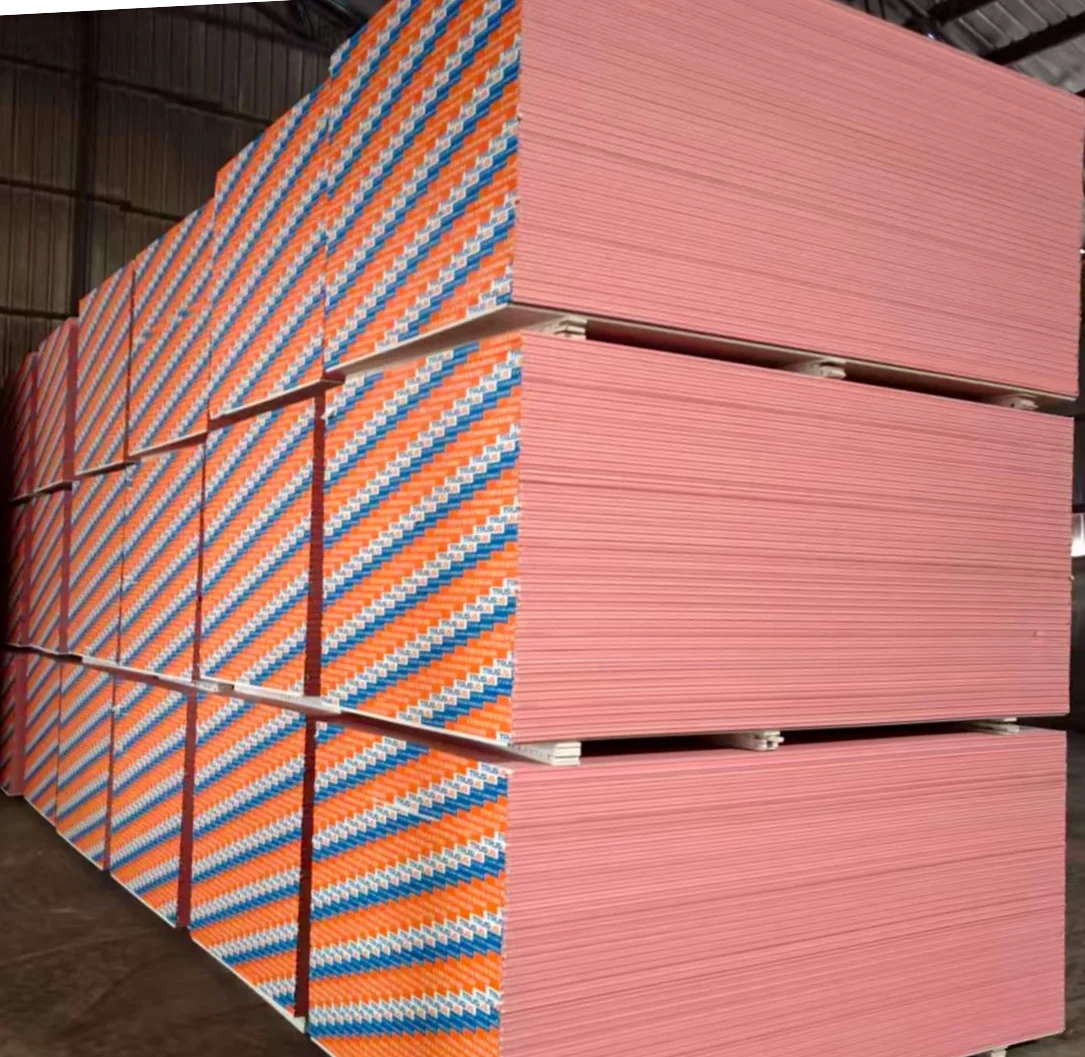
Fireboards provide structural stability and thermal protection during high temperatures. They maintain integrity while delaying fire progress, ensuring safer evacuation and minimized damage.
TRUSUS manufacturing insight: a good fireboard doesn’t just resist fire—it holds structure under pressure.
TRUSUS Fireboard Advantage Summary
| Advantage | Description | Result |
|---|---|---|
| Heat Absorption | Water crystals in gypsum absorb heat | Slows temperature rise |
| Structural Stability | Keeps rigidity under stress | Prevents collapse or fall |
| Smoke Barrier | Limits smoke transfer | Improves safety duration |
| Non-toxic Composition | No harmful gas release | Safer environment during fire |
Systemic Value of Fireboard
| Element | Function | Integration Benefit |
|---|---|---|
| Wall System | Core layer support | Enhances load and impact strength |
| Ceiling Protection | Fire stop for upper surfaces | Prevents falling debris |
| Building Safety | Improves overall rating | Meets construction codes |
Using fireboards gives walls both physical endurance and engineered predictability—it’s an invisible guardian in modern architecture.
Conclusion
Deflection limits and fire ratings define modern gypsum board systems. TRUSUS believes safety comes from mechanical precision and environmental resistance working together—when boards are chosen as part of a system, they create structures that stay straight, strong, and secure under time, gravity, and heat alike.