



Common drywall partition mistakes include poor framing alignment, skipping tape reinforcement at seams, overdriving screws, and ignoring expansion gaps. These errors cause cracks, uneven surfaces, and unstable walls. A drywall system is not just panels—it’s an engineered assembly that needs correct joint treatment, fastening, and moisture management.
Drywall problems often start from improper system installation, not faulty boards. gypsum partition systems require precise screw spacing and gap control to stay durable.
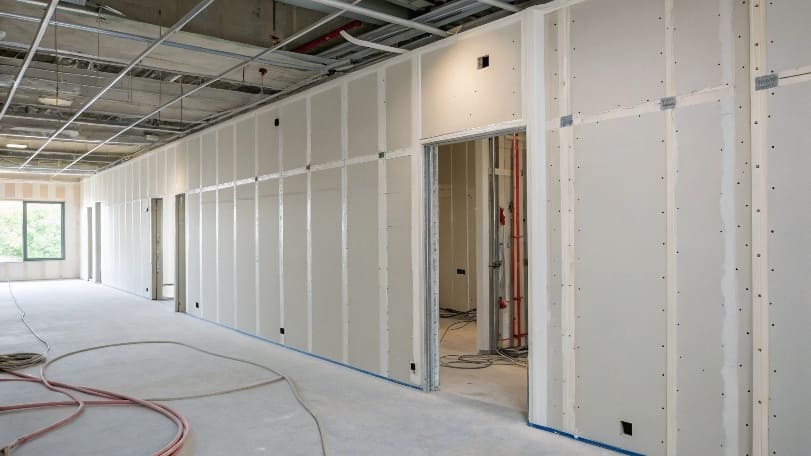
From my site visits, most faults occur because contractors treat drywall like wood panels. Without respect for structural standards and air tolerance, partitions fail early.
Is Gypsum Board Good for Wall Partition?
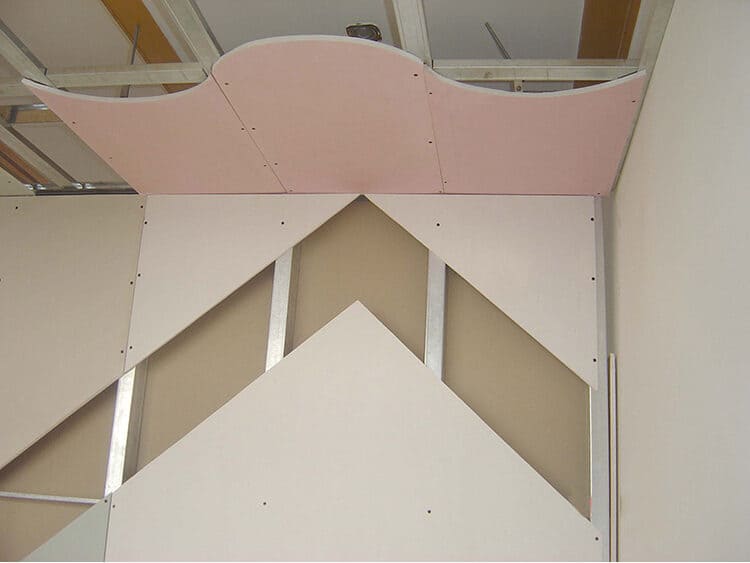
Yes, gypsum board is an excellent choice for wall partitions. It offers stability, sound insulation, fire resistance, and smooth finish. It allows easy cutting, light framing, and quick installation while keeping weight low. When installed correctly, it provides a clean, adaptable system suitable for offices and homes.
Gypsum board brings lightweight modularity and professional finish. TRUSUS gypsum boards combine fire safety and acoustic control, making them ideal for high-quality partitions.
Additional Use Cases
| Environment | Gypsum Board Type | Purpose |
|---|---|---|
| Office space | Standard board | Quick install |
| Bathroom zones | Moisture-resistant board | Damp safety |
| Hotel rooms | Acoustic board | Noise control |
| Residential interiors | Fire-rated board | Safety plus comfort |
Versatile and scalable—gypsum board partitions fit any modern architecture.
What Are the Common Drywall Cutting Mistakes?
Common drywall cutting mistakes include pressing too hard, sawing instead of scoring, cutting without support, and ignoring measurement accuracy. These lead to rough edges, cracked panels, and wide joints. Cutting drywalls requires scoring the face layer lightly and snapping, not sawing through its core.
Overcutting ruins panel integrity. TRUSUS training standards teach light score technique using utility knives rather than saw blades.

Cutting Error Guide
| Mistake | Cause | Effect | Solution |
|---|---|---|---|
| Pressing too hard | Deep knife force | Uneven snap | Gentle scoring |
| No support surface | Hanging cut | Panel fracture | Use sawhorse or table |
| Wrong measurement | Poor marking | Gap mismatch | Double-check line |
| Cut along wrong direction | Against paper grain | Edge tear | Follow paper face |
| Saw cutting gypsum core | Dust and cracks | Weak joint | Snap method only |
Precision cutting ensures tight fit and minimal finishing work.
Correct Cutting Steps
| Step | Tool | Key Action |
|---|---|---|
| Mark line | Pencil + straightedge | Accurate outline |
| Score face | Utility knife | Shallow front cut |
| Snap along line | Support edge | Clean break |
| Trim paper backing | Knife blade | Smooth finish |
| Check alignment | Measure twice | Avoid gaps |
Following these steps keeps edges firm and panels intact, improving fit and life span.
What Does a Bad Drywall Job Look Like?
A bad drywall job shows uneven joints, visible screw heads, cracked corners, and bumpy texture. It often signals poor taping, inconsistent mud layers, and rushed sanding. Gaps at seams or rough paint absorption reveal careless finishing and missing proper joint compounds.
Low-quality drywall work exposes joint lines and imperfections. TRUSUS finishing guides define joint smoothness as a standard—no shadows, cracks, or tool marks visible under side light.
Drywall Fault Indicators
| Problem | Visual Sign | Cause | Prevention |
|---|---|---|---|
| Joint cracks | Lines visible | No tape or wrong compound | Use mesh tape |
| Screw pops | Bulges or dents | Overdrive or loose framing | Proper screw leveling |
| Uneven finish | Waves or lumps | Bad sanding | Sand evenly and prime |
| Edge gaps | Dark seams | Measurement errors | Fit panels snugly |
| Paint blotches | Uneven coating | No primer or contamination | Apply primer |
A bad drywall job lacks both system accuracy and aesthetic finish.
Appearance Standards for Good Work
| Assessment Area | Good Job | Bad Job |
|---|---|---|
| Joint line | Invisible after paint | Visible or cracked |
| Fastener marks | None visible | Dents or bumps |
| Surface level | Perfectly smooth | Uneven or rippled |
| Paint adhesion | Even spread | Patchy absorption |
| Edge sealing | Tight closure | Open joints |
Professional workmanship transforms basic drywall assemblies into high-end surfaces.
Conclusion
Drywall mistakes—whether cutting, partitioning, or finishing—stem from ignoring system principles. TRUSUS gypsum board partitions excel when handled as engineered assemblies, not casual panels. Precision cutting, correct screw spacing, and joint care define professional quality. A bad drywall job looks rough and short-lived; a good one performs like a structural system—light, smooth, durable, and repeatable—the true essence of modern wall construction.