



A sagging gypsum ceiling shows visible dips, uneven joints, or cracking at seams. You might notice light reflections changing, or ceiling edges pulling apart from walls—it’s all a sign of loss of tension.
TRUSUS structural insight: what looks like a curve might be a story of imbalance.
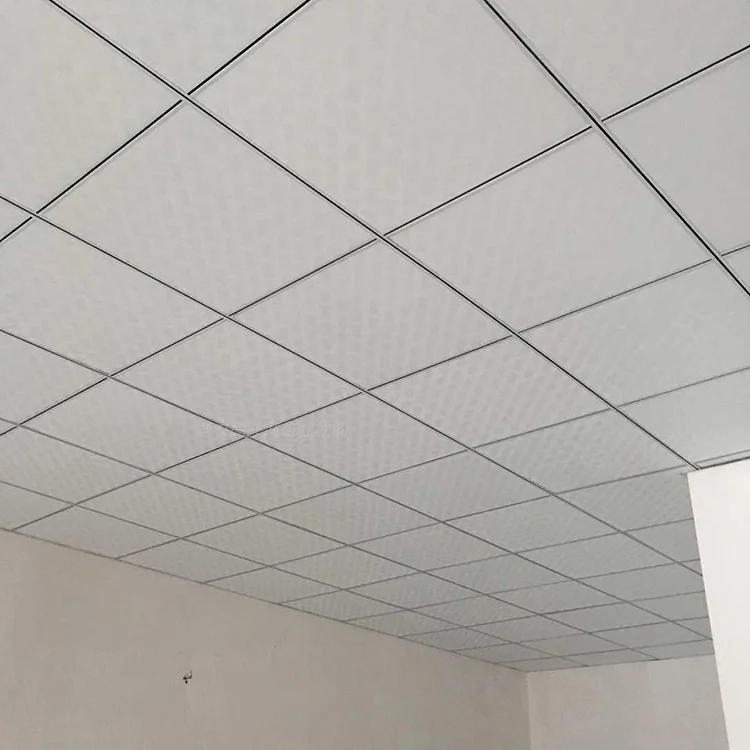
Check across the room with a straight edge or laser level. If deflection exceeds more than 10 mm across 2 meters, correction is needed before damage spreads.
Can a Sagging PVC Gypsum Ceiling Tile Be Fixed?
Yes, it can be fixed. The repair often includes tightening loose frames, replacing damaged tiles, or improving humidity control. PVC-faced gypsum tiles can recover stability once weight and moisture issues are corrected.
repair insight: fixing is not replacing—it’s restoring strength that once belonged.
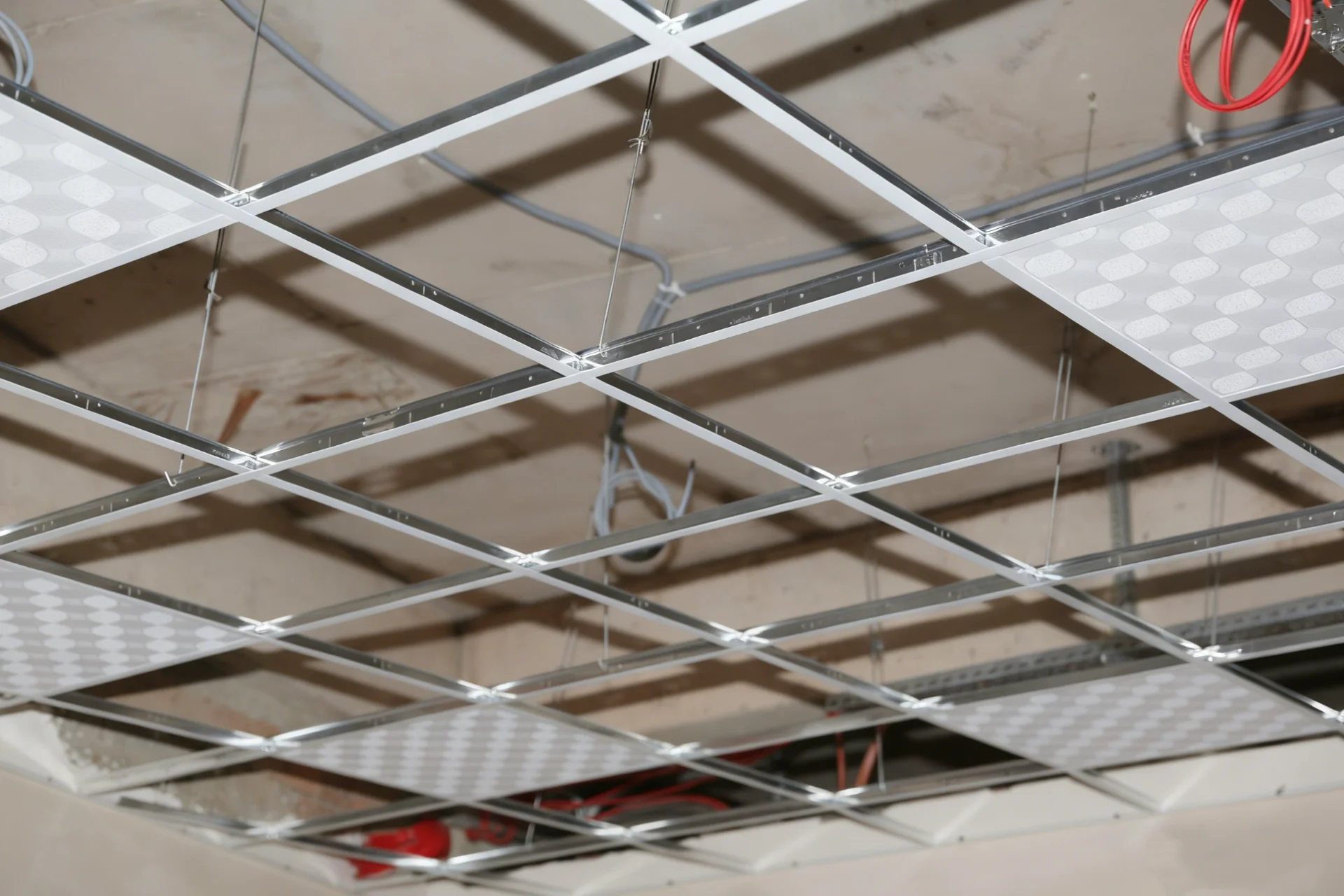
Fixing Steps for PVC Gypsum Tiles
| Step | Action | Purpose | Tip |
|---|---|---|---|
| 1 | Identify sagging zone | Locate cause | Observe both frame and tile |
| 2 | Remove affected tiles | Prevent further stress | Handle edges gently |
| 3 | Recheck suspension system | Ensure level spacing | Adjust grid wires or screws |
| 4 | Replace or re-secure tiles | Restore flatness | Replace bent metal runners |
| 5 | Control humidity | Stop recurring sag | Use proper roof insulation |
PVC gypsum tiles are forgiving materials when handled with care during the fixing process.
What Can Cause the Gypsum Ceiling Tiles to Sag?
Common causes include excessive moisture, improper frame spacing, weak fasteners, or roof leaks. Environmental factors often accelerate deformation more than manufacturing issues.
diagnostic insight: sagging is a symptom—understanding its source is the real cure.
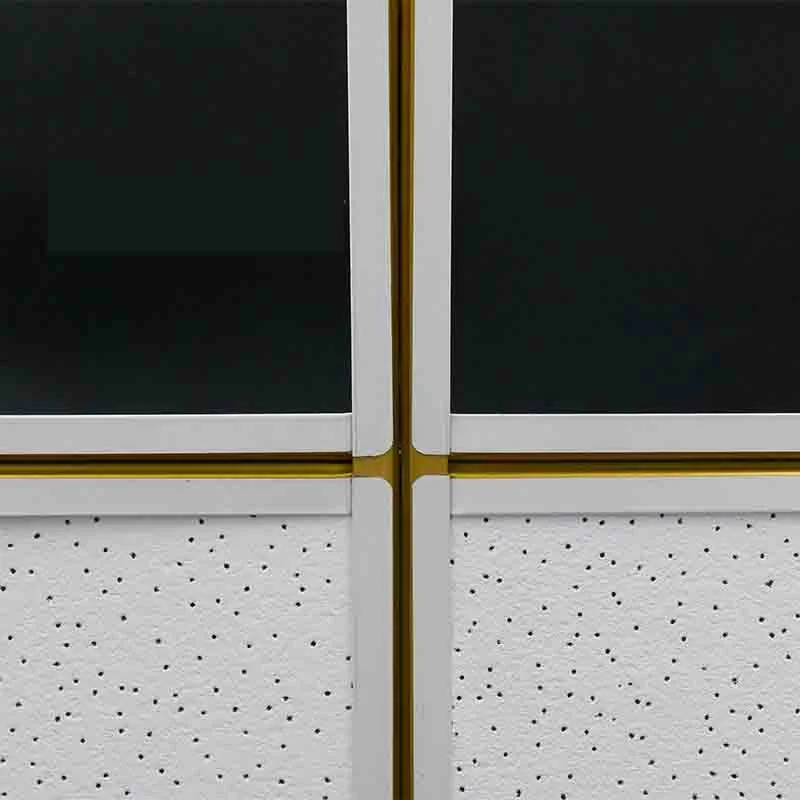
Typical Cause Matrix
| Category | Cause | Description | Prevention |
|---|---|---|---|
| Structural | Too wide frame spacing | Reduced support | Follow manufacturer spacing |
| Environmental | Humidity or leaks | Absorbed moisture deforms boards | Seal roof and manage ventilation |
| Mechanical | Loose fasteners | Uneven load transfer | Use proper screw depth |
| Material Aging | Adherent failure in PVC coating | Peeling and sagging | Choose high-quality adhesive films |
| Installation Error | Wrong screw position or torque | Weak fitting point | Ensure perpendicular fixing angles |
Understanding these factors allows maintenance teams to treat the issue before a full collapse occurs.
When to Worry About a Sagging Ceiling?
You should worry when cracks appear, joints open, or tiles start detaching. These signs may indicate deeper structural stress. Immediate inspection prevents ceiling failure and potential hazards.
safety insight: worry early—waiting never makes a ceiling stronger.
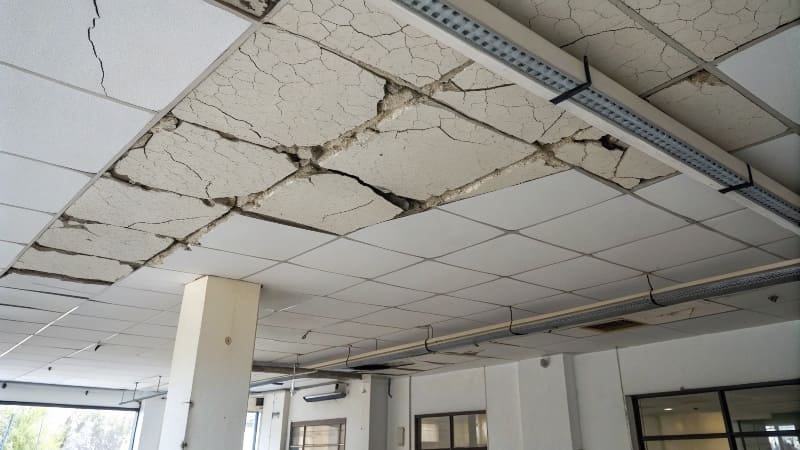
Risk Evaluation Table
| Warning Sign | Possible Problem | Required Action |
|---|---|---|
| Visible cracks | Frame distortion | Call a professional installer |
| Tile corners separated | Water or adhesive failure | Check humidity and roof condition |
| Dropped sections | Fastener release | Replace suspension points |
| Continuous downward curve | Frame fatigue | Reinforce full ceiling grid |
| Sound when touched | Board detachment | Immediate replacement needed |
Monitoring these indicators keeps the ceiling safe and preserves the trust customers expect from gypsum systems.
Conclusion
At TRUSUS, I see ceiling sagging not as material failure but as a dialogue between design and environment. When we manage installation, moisture, and maintenance together, the ceiling remains a structure of lasting confidence—not just decoration.