



Hide old wooden beams using TRUSUS light steel framing with precise measurements creating independent support structure, moisture barriers preventing condensation issues, thermal insulation eliminating cold bridges, seamless drywall installation with proper joint treatment, and integrated systems accommodating lighting and HVAC while maintaining ceiling height and structural integrity.
Light steel framing with precise measurements creates independent support structure avoiding stress interaction with existing wood beams. Moisture barriers prevent condensation issues that cause drywall damage and mold growth. Thermal insulation eliminates cold bridges preventing ghosting effects and energy loss. Seamless drywall installation with proper joint treatment creates smooth finished surfaces. Integrated systems accommodate lighting and HVAC while maintaining ceiling height and structural integrity.
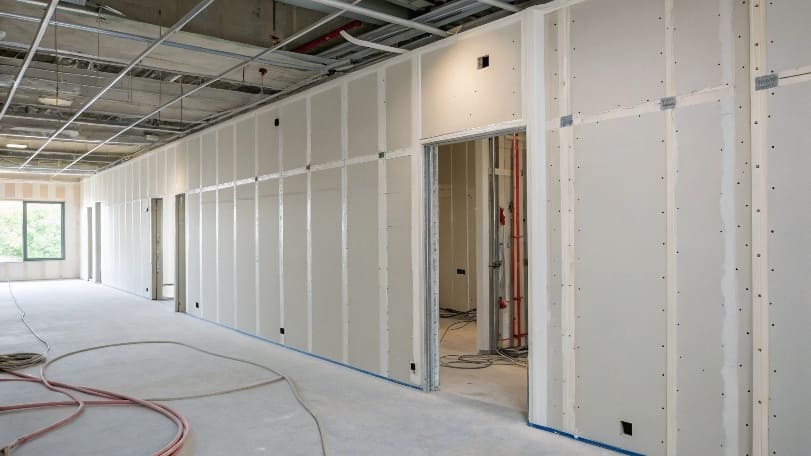
From my experience renovating heritage buildings in Georgetown, I've learned that proper beam concealment requires understanding both the structural load paths and the thermal dynamics to prevent future problems.
How to Drywall Around an Exposed Beam?
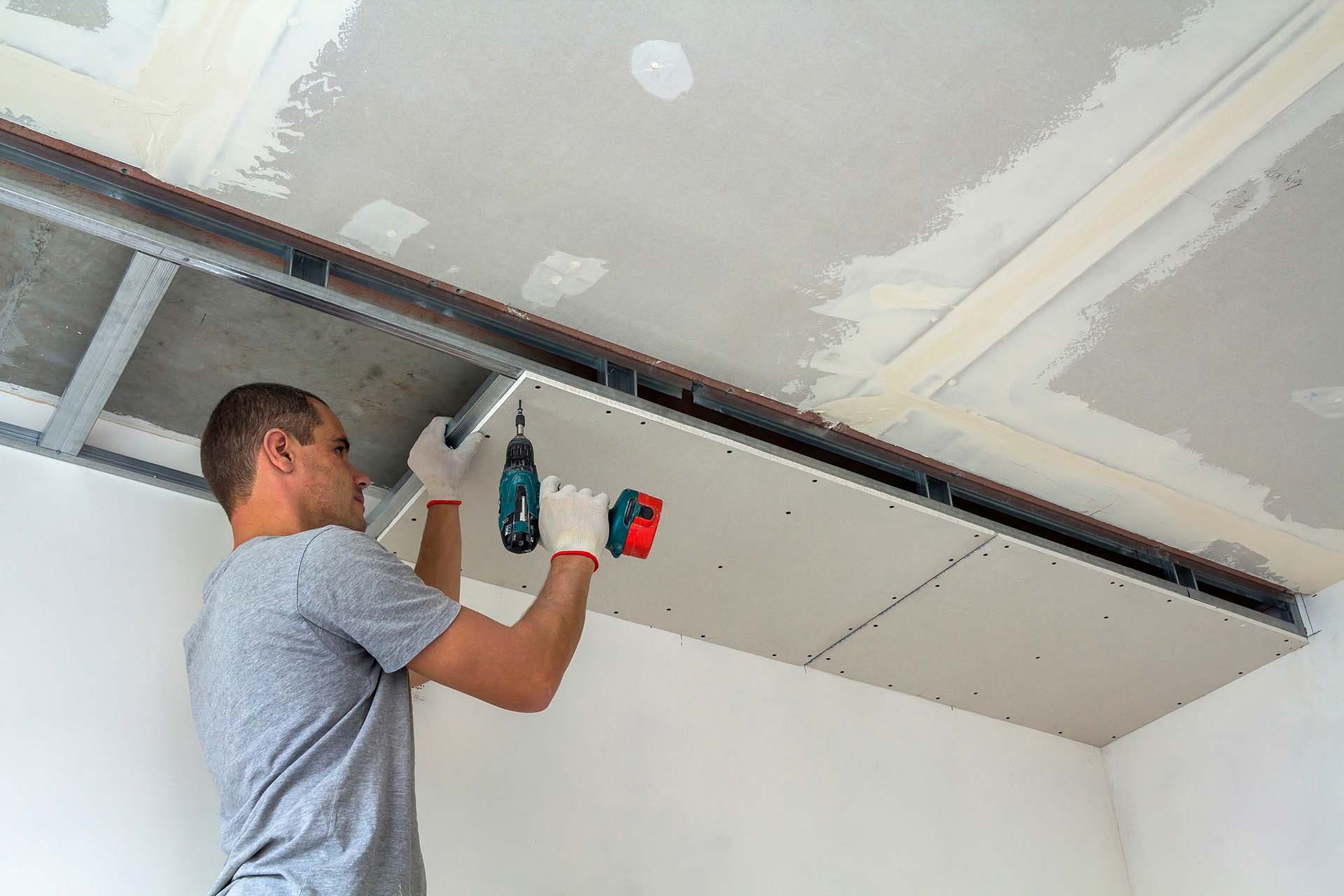
Drywall around exposed beams using precision cutting techniques with laser measurements ensuring tight fits, flexible joint compound accommodating structural movement, corner bead installation providing clean edges, proper fastener spacing preventing cracking, and sequential installation maintaining straight lines while accommodating beam irregularities.
Precision cutting techniques with laser measurements ensure tight fits minimizing gaps and reducing finishing work. Flexible joint compound accommodates structural movement preventing crack formation at beam interfaces. Corner bead installation provides clean edges and professional appearance at all transitions. Proper fastener spacing prevents cracking from over-driving or under-securing drywall panels. Sequential installation maintains straight lines while accommodating beam irregularities and dimensional variations.
Structural Movement Accommodation
Design considerations for accommodating structural movement in beam-drywall interfaces.
| Movement Type | Typical Range | Accommodation Method | Material Selection | Long-term Performance |
|---|---|---|---|---|
| Thermal Expansion | ±3-6mm | Flexible sealants | Elastomeric compounds | Excellent |
| Moisture Movement | ±2-4mm | Expansion joints | Moisture-resistant materials | Very good |
| Structural Settlement | ±1-3mm | Floating connections | Resilient fasteners | Good |
| Live Load Deflection | ±1-2mm | Slip joints | Sliding connections | Excellent |
| Seasonal Movement | ±2-5mm | Articulated systems | Flexible materials | Very good |
Movement accommodation prevents cracking and maintains appearance quality.
Professional Installation Sequence
Step-by-step installation sequence for optimal results around exposed beams.
| Installation Step | Procedure | Quality Check | Critical Success Factor | Common Error Prevention |
|---|---|---|---|---|
| Measurement | Precise beam survey | Dimensional accuracy | Multiple verification points | Template verification |
| Cutting | Template-guided cuts | Fit verification | Sharp blade technique | Over-cutting prevention |
| Installation | Sequential mounting | Alignment check | Consistent fastener pattern | Gap minimization |
| Joint Treatment | Multi-coat system | Surface smoothness | Proper drying time | Rush-job prevention |
| Final Finishing | Prime and paint | Uniform appearance | Quality materials | Touch-up elimination |
Systematic approach ensures consistent professional results.
What is Drywall Ghosting?
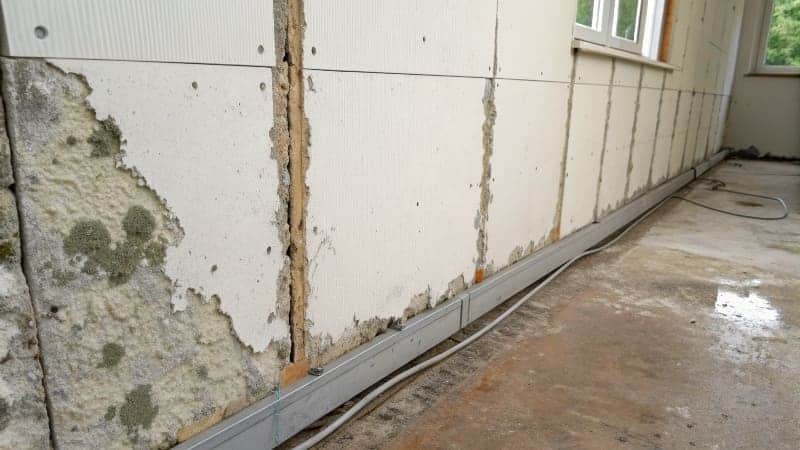
Drywall ghosting is dark discoloration appearing on finished surfaces caused by thermal bridging creating temperature differentials, air filtration depositing dust particles, moisture condensation promoting soil accumulation, and inadequate insulation allowing heat transfer through framing members, resulting in visible patterns matching underlying structure.
Thermal bridging creates temperature differentials between insulated and uninsulated areas causing condensation and dust accumulation. Air filtration deposits dust particles along temperature boundaries where condensation occurs. Moisture condensation promotes soil accumulation in cooler areas creating visible dark patterns. Inadequate insulation allows heat transfer through framing members creating temperature variations that attract airborne particles.
Ghosting Prevention Strategies
Comprehensive strategies for preventing drywall ghosting in modern construction.
| Prevention Method | Technical Approach | Effectiveness | Implementation Cost | Long-term Benefit |
|---|---|---|---|---|
| Continuous Insulation | Thermal bridge elimination | 95% effective | Moderate | Excellent |
| Air Sealing | Infiltration control | 90% effective | Low | Very good |
| Vapor Barriers | Moisture control | 85% effective | Low | Good |
| Advanced Framing | Thermal optimization | 92% effective | Moderate | Excellent |
| Quality Installation | Professional techniques | 88% effective | Variable | Very good |
Multiple strategies combined provide optimal ghosting prevention.
Thermal Bridge Analysis
Analysis of thermal bridging effects in different framing systems.
| Framing System | Thermal Bridging | Ghosting Risk | Insulation Effectiveness | Energy Performance |
|---|---|---|---|---|
| Steel Studs | High conductivity | Very high | 60-70% | Poor |
| Wood Studs | Moderate bridging | Moderate | 75-85% | Good |
| Advanced | Minimal bridging | Low | 90-95% | Excellent |
| Double Wall | Very low | Very low | 95%+ | Excellent |
| Continuous Insulation | Eliminated | None | 98%+ | Superior |
Advanced systems eliminate ghosting while improving energy performance.
Remediation Techniques
Methods for addressing existing ghosting problems in completed installations.
| Remediation Level | Approach | Effectiveness | Disruption Level | Cost Range |
|---|---|---|---|---|
| Surface Cleaning | Professional washing | 30-50% | Minimal | Low |
| Paint Systems | Blocking primers | 60-80% | Low | Low-moderate |
| Insulation Upgrade | Blown-in insulation | 85-95% | Moderate | Moderate |
| Complete Renovation | System replacement | 100% | High | High |
| Preventive Maintenance | Regular cleaning | Variable | Minimal | Very low |
Prevention always preferred over remediation for ghosting control.
Can I Use PVC Tongue-and-Groove Panels to Modernize an Old Wooden Patio?
Yes, you can use PVC tongue-and-groove panels to modernize old wooden patios providing weather resistance eliminating rot and decay, low maintenance reducing painting and sealing requirements, moisture immunity preventing warping and splitting, UV stability maintaining color and appearance, and easy installation over existing structures with minimal preparation.
Weather resistance eliminates rot and decay common with wooden surfaces in tropical climates. Low maintenance reduces painting and sealing requirements to virtually zero over product lifetime. Moisture immunity prevents warping and splitting that plague traditional wood installations. UV stability maintains color and appearance without fading or chalking over 15+ years. Easy installation over existing structures requires minimal preparation and specialized tools.

Installation Methods for Patio Renovation
Installation approaches for PVC panels over existing wooden patio structures.
| Installation Method | Substrate Preparation | Fastening System | Complexity Level | Best Application |
|---|---|---|---|---|
| Direct Overlay | Minimal prep | Hidden fasteners | Low | Good substrate |
| Furring Strip | Leveling required | Standard screws | Moderate | Uneven substrate |
| Complete Removal | Full preparation | New framing | High | Damaged substrate |
| Hybrid Approach | Selective repair | Mixed systems | Variable | Mixed conditions |
| Professional Install | Comprehensive prep | Engineered system | Professional | High-end projects |
Method selection depends on existing substrate condition.
Climate Performance in Tropical Conditions
Performance analysis of PVC panels in Guyana's tropical climate conditions.
| Climate Factor | Impact on Wood | Impact on PVC | Advantage Factor | Practical Benefit |
|---|---|---|---|---|
| High Humidity | Rot and decay | No effect | 100% better | Extended life |
| UV Exposure | Fading/cracking | Stable performance | 90% better | Color retention |
| Temperature Cycling | Warping/splitting | Minimal movement | 85% better | Dimensional stability |
| Heavy Rainfall | Water damage | No absorption | 100% better | Weather immunity |
| Salt Air | Accelerated decay | No corrosion | 100% better | Coastal suitability |
Tropical climate advantages compelling for PVC selection.
Aesthetic and Design Options
Design possibilities for PVC tongue-and-groove patio applications.
| Design Element | Available Options | Aesthetic Impact | Installation Consideration | Cost Impact |
|---|---|---|---|---|
| Color Selection | 15+ standard colors | High visual impact | No painting required | Minimal |
| Wood Grain Texture | Multiple patterns | Natural appearance | Standard installation | None |
| Panel Width | 4", 6", 8" options | Proportional scaling | Layout planning | Minimal |
| Trim Systems | Coordinated profiles | Professional finish | Additional components | Moderate |
| Lighting Integration | Groove compatibility | Enhanced ambiance | Electrical coordination | Variable |
Design flexibility enables custom aesthetic solutions.
Maintenance and Longevity
Maintenance requirements and expected performance life for PVC patio installations.
| Maintenance Task | Frequency | Procedure | Cost Level | Performance Impact |
|---|---|---|---|---|
| Regular Cleaning | Quarterly | Soap and water | Very low | Appearance maintenance |
| Deep Cleaning | Annually | Pressure washing | Low | Stain removal |
| Inspection | Bi-annually | Visual check | None | Early problem detection |
| Fastener Check | Every 2 years | Tightening | Very low | Structural integrity |
| Replacement | 25+ years | Full system | High | End of service life |
Minimal maintenance requirements provide long-term cost savings.
Cost-Benefit Analysis
Economic analysis comparing PVC panels versus traditional wood for patio applications.
| Cost Category | PVC Panels | Wood Panels | 15-Year Analysis | Economic Advantage |
|---|---|---|---|---|
| Initial Material | $25-35/m² | $15-25/m² | Higher upfront | 40% more initial |
| Installation | $15-25/m² | $20-30/m² | Lower complexity | 25% savings |
| Maintenance | $5/year/m² | $25/year/m² | Significant savings | 80% reduction |
| Replacement | None | 1-2 replacements | Major savings | $300-500/m² |
| Total Cost | $45-70/m² | $180-350/m² | 60-75% savings | Clear winner |
Long-term economics strongly favor PVC panels for patio applications.
Conclusion
Hide old wooden beams using TRUSUS light steel framing with precise measurements, moisture barriers, thermal insulation, seamless drywall installation, and integrated systems accommodating lighting while maintaining ceiling height. Drywall around exposed beams using precision cutting with laser measurements, flexible joint compound, corner bead installation, proper fastener spacing, and sequential installation maintaining straight lines. Drywall ghosting is dark discoloration caused by thermal bridging, air filtration, moisture condensation, and inadequate insulation creating visible patterns matching underlying structure. Use PVC tongue-and-groove panels to modernize old wooden patios providing weather resistance, low maintenance, moisture immunity, UV stability, and easy installation over existing structures with minimal preparation**.